Projects
►Destiny
►Starhawk DLC
►Starhawk MP
►Starhawk Campaign
►Natural Selection 2
►Quake 4: Map Pack
►Quake 4
►Natural Selection
Personal Work
Site
Contact


+
+
+
+
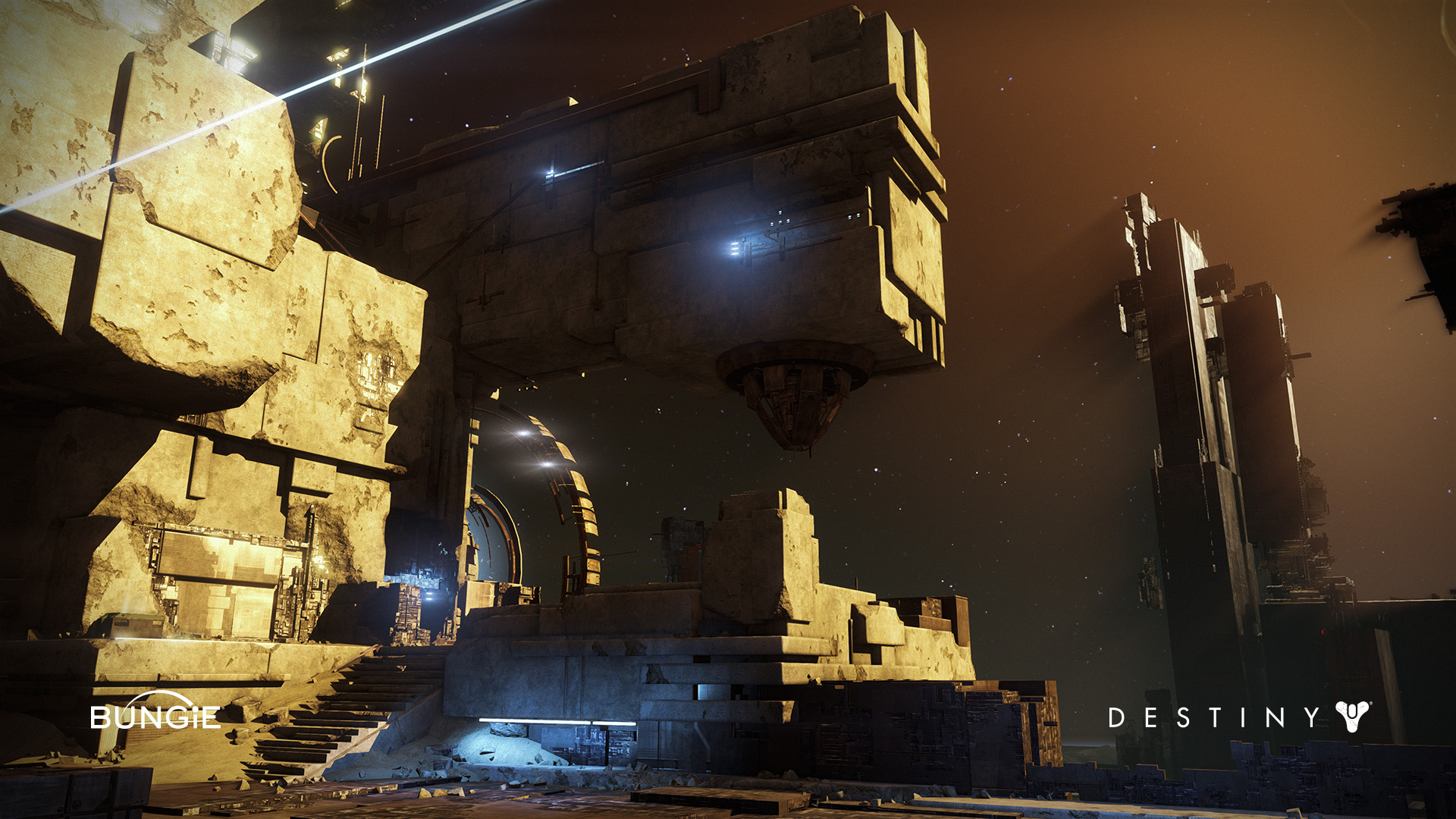
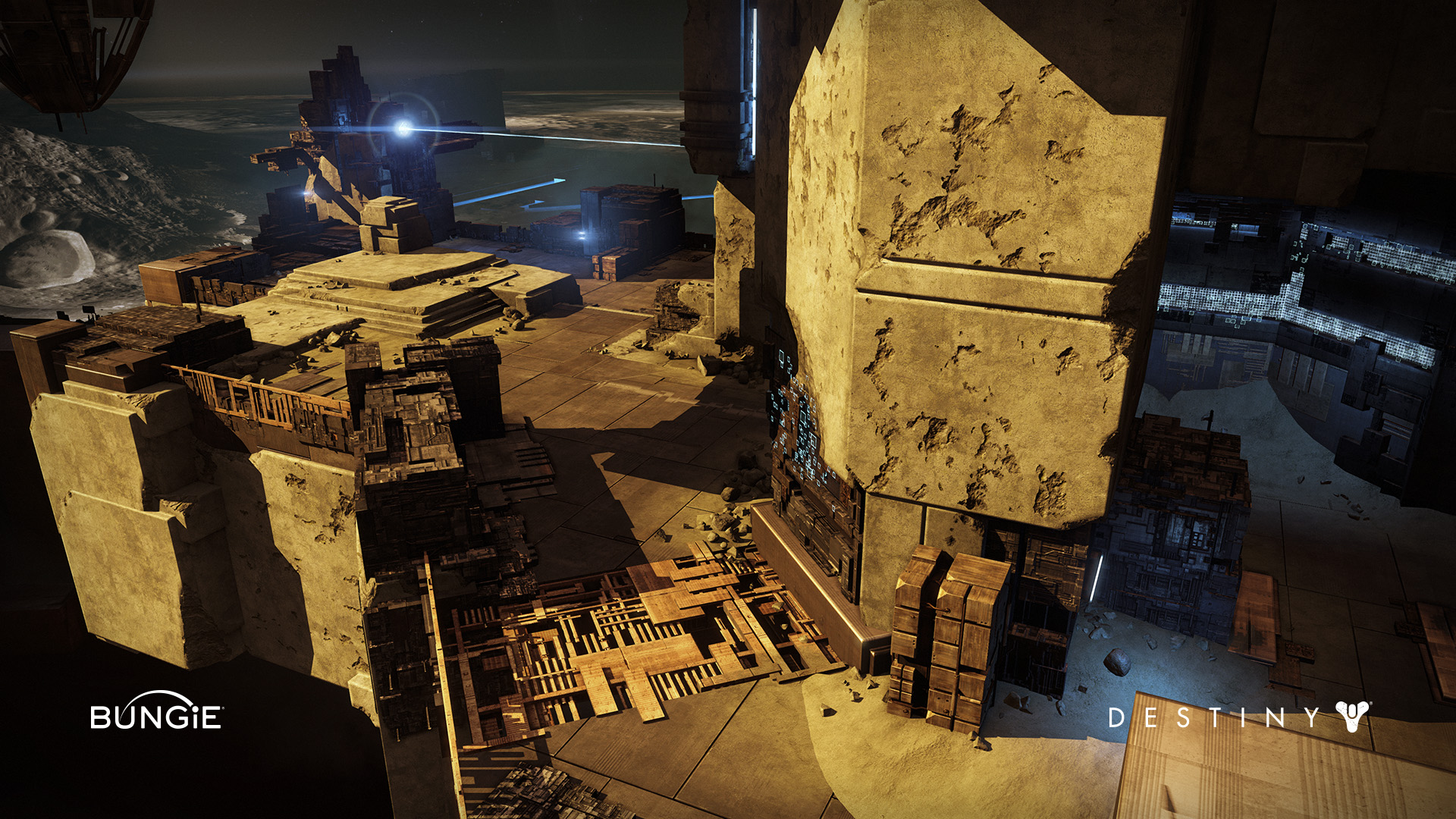
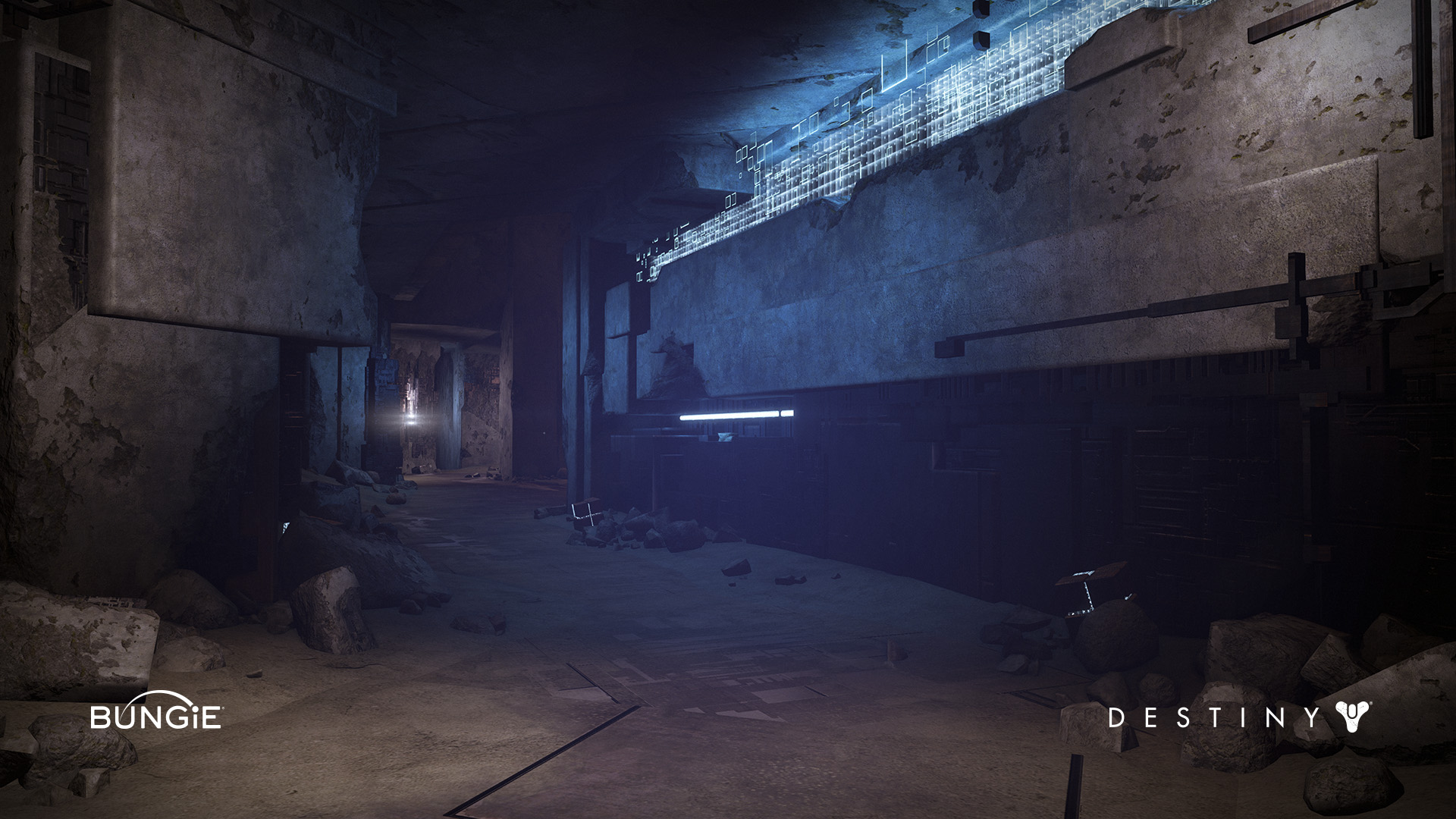
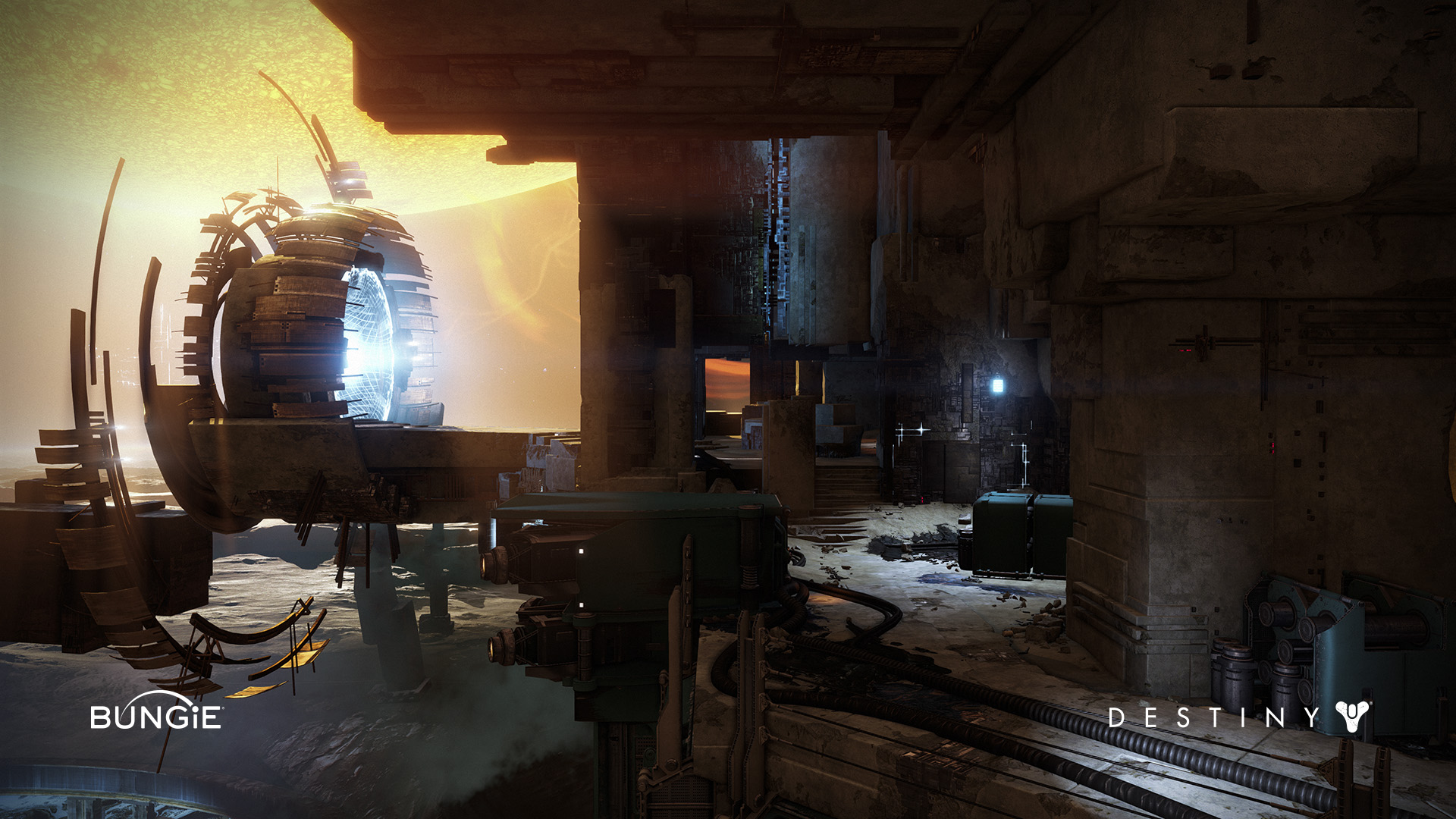
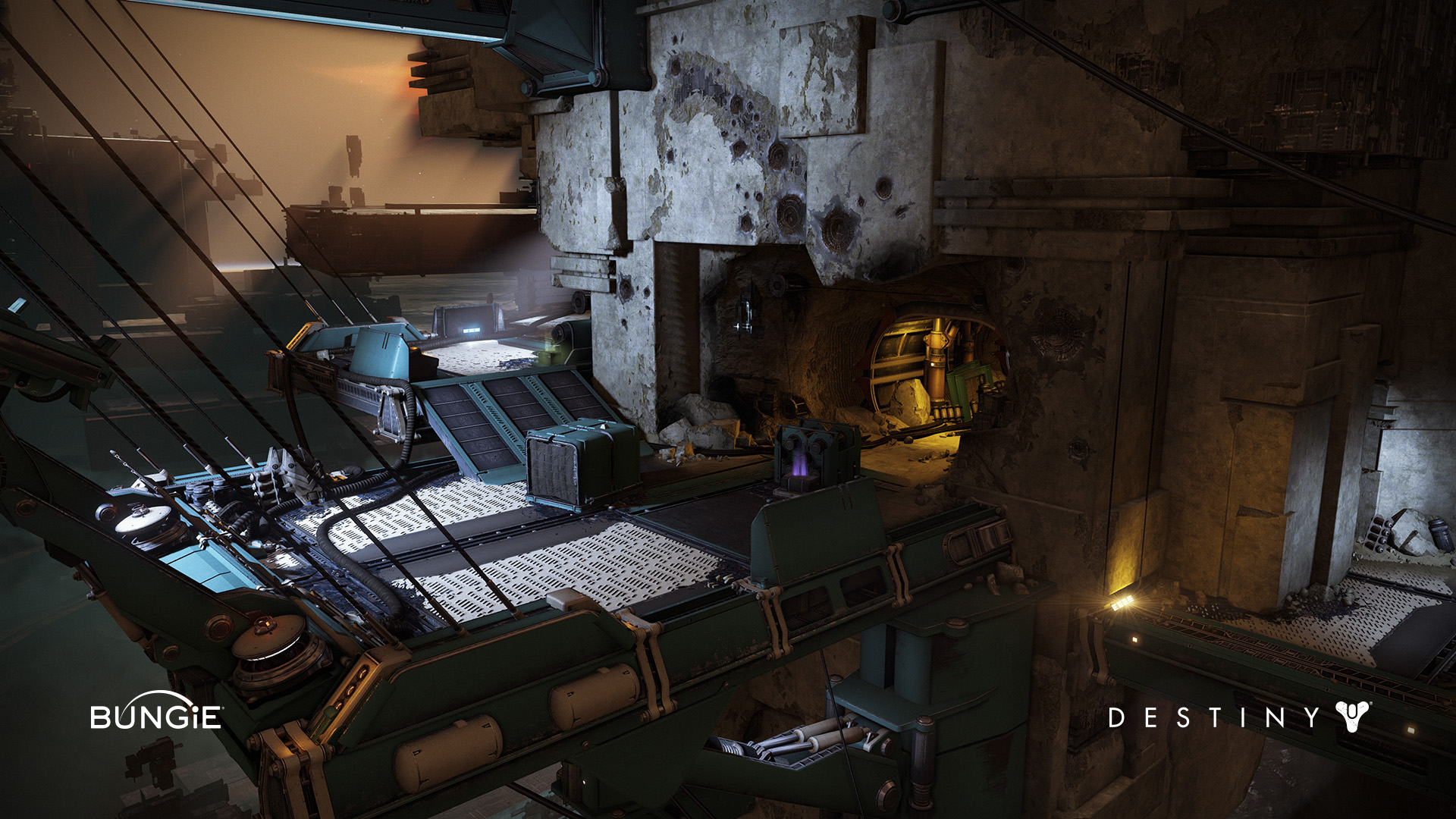
As with Sector 618, I built most of initial blockout in Max instead of my usual habit of kitbashing terrain and existing meshes. I took thematic inspiration from the Vex Citadel high above Venus (similarly, the spire visible in the skybox of Thieves' Den), but wanted to transplant it to the sky over Mercury, a destination we hadn't utilized much for the Crucible.
My initial layout shared some DNA with ideas I had used in You'll Shoot Your Eye Out, finally coming full circle on the (coincidental) similarities between the disintegrating concrete cubes and Vex architecture. This inspiration included a pair of zig-zagging jump routes from the center lane up to the outer "B" path, and a particular death-defying set of jumps at the bottom of the level connecting A and C. Over time, however, the layout converged into a more conservative three-lane layout.
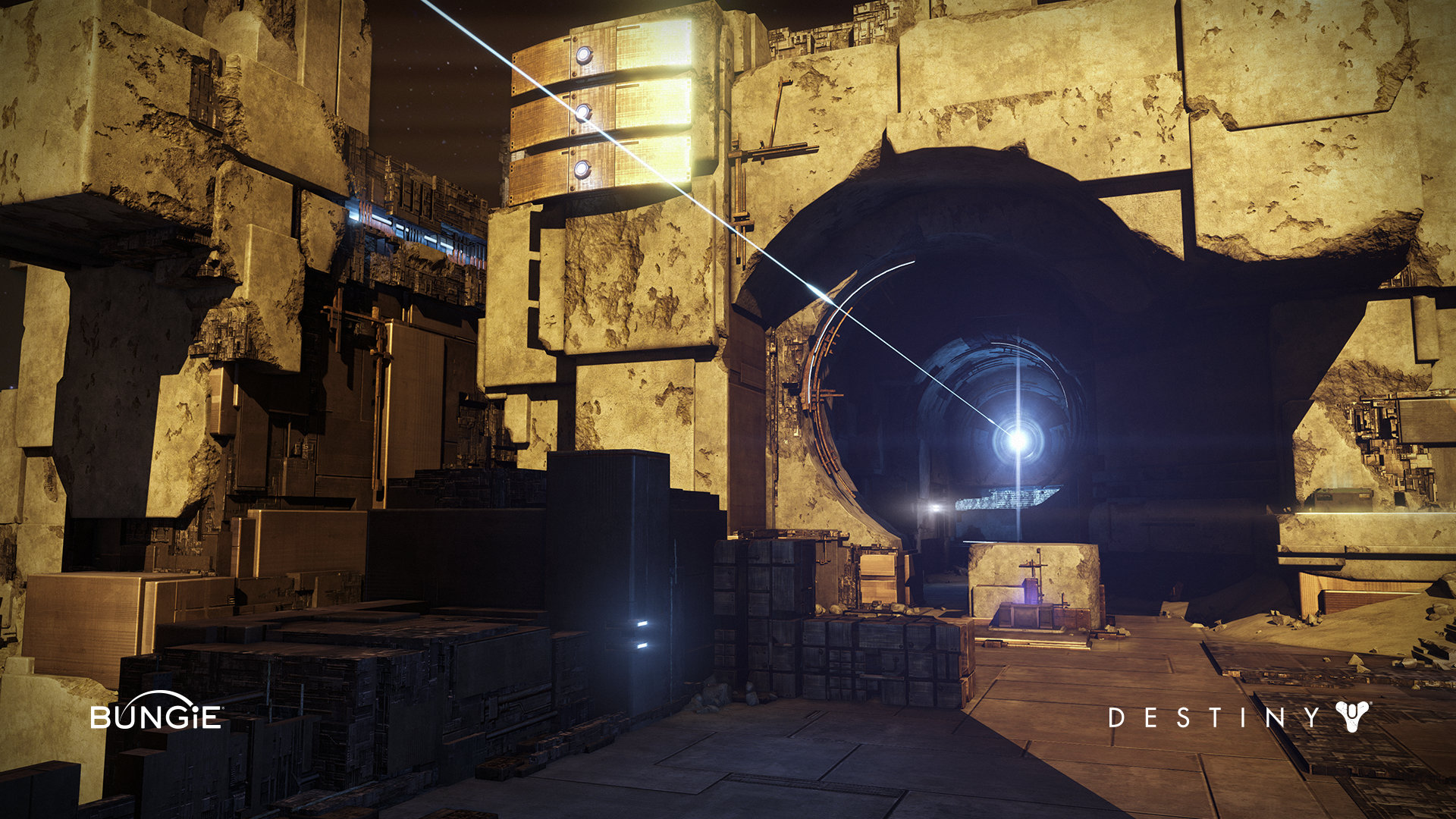
As the layout began to settle, partner-in-crime Adam Williams suggested the one-way teleporter platform to create a new axis through the map. This route added significant value to holding the B flag in Control and allowed teams to quickly react to players attempting to contest zones A or C. Plus, the glowing circular portal made for an excellent landmark on the outer edge of the map.
Andrew Weldon, Adam Williams
Adam Williams
Madison Parker
Mark Goldsworthy
+
+
+
Adam's environment art touch also integrated the added visual flavor of Cabal equipment, drill holes, and battle scoring to differentiate the sides of the map, implying a Cabal assault had taken place and that they had some interest in this particular platform. The Cabal ships hovering nearby are meant to imply a back story where the Cabal landed, but mysteriously vanished before completing their work—because if there's one thing I love, it's Cabal forces vanishing at mysterious Vex installations.
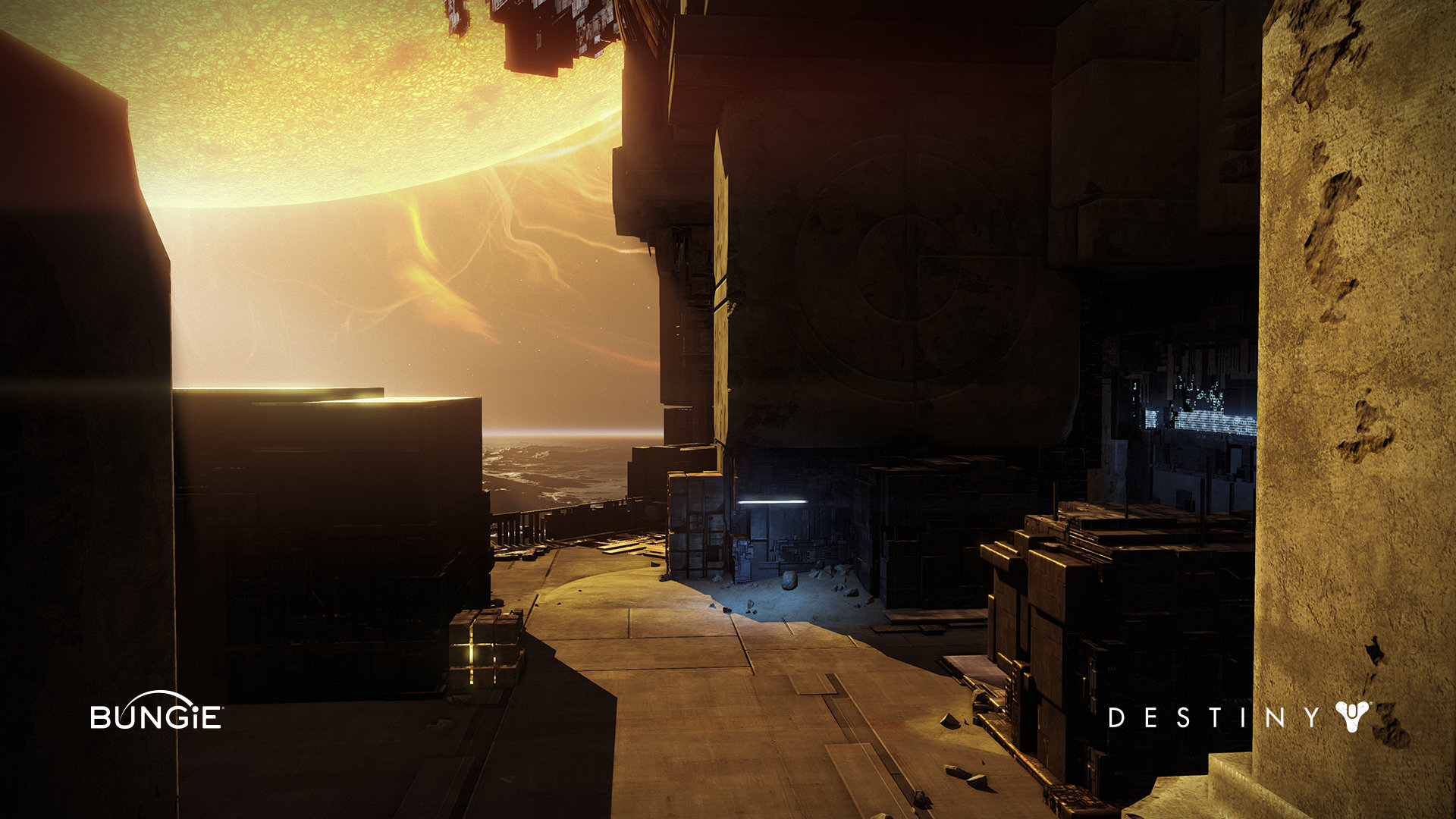
The Burning Shrine, Destiny's signature Mercury map at launch, suffered from a striking but blinding sun when players moved to the outside of the map. For Vertigo, sky artist/wizard Mark Goldsworthy shifted the sun to loom large overhead, lifting it mostly out of gameplay lines of sight and creating striking directionality and shadows across the map.
+
+
+
+
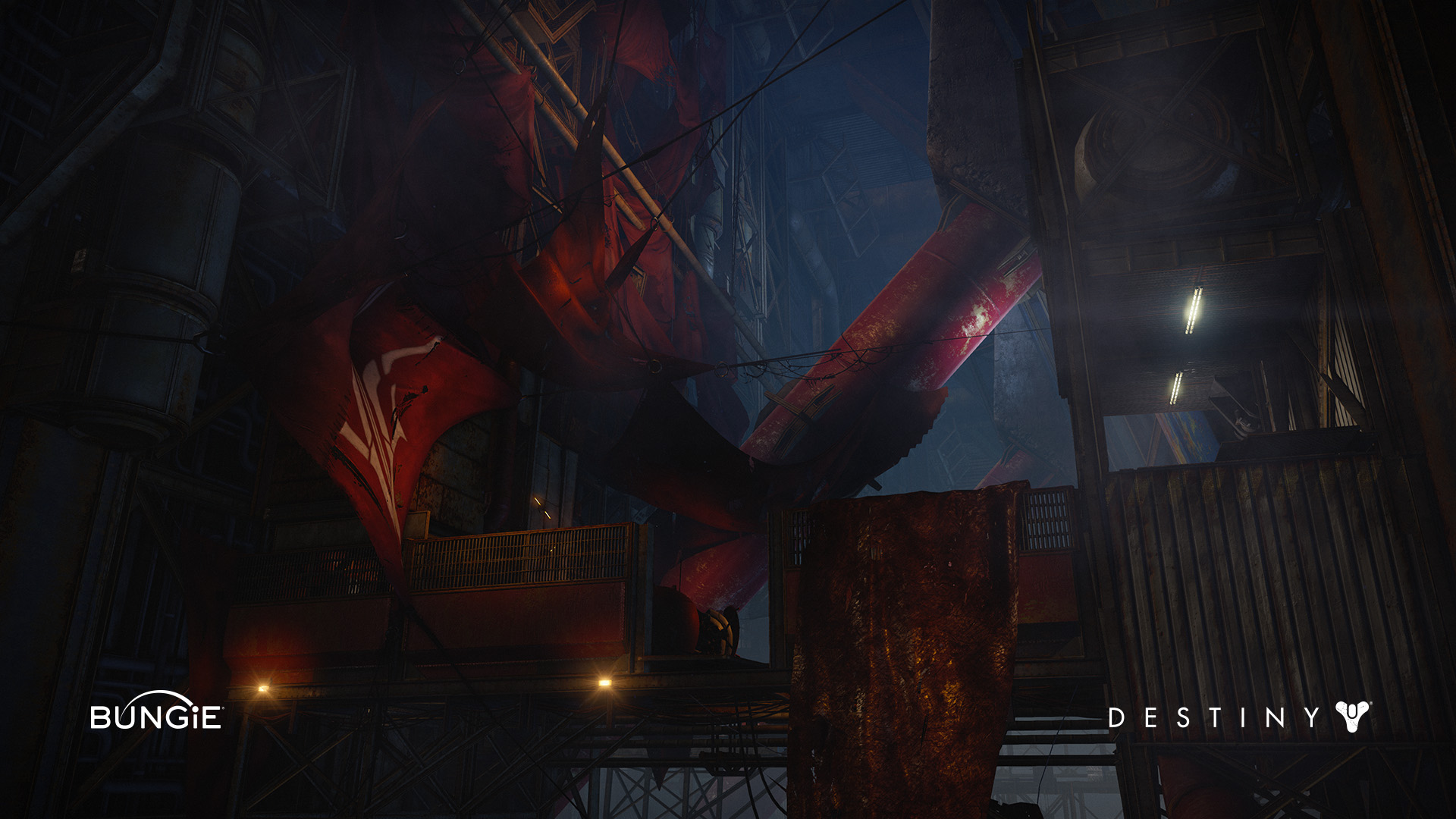
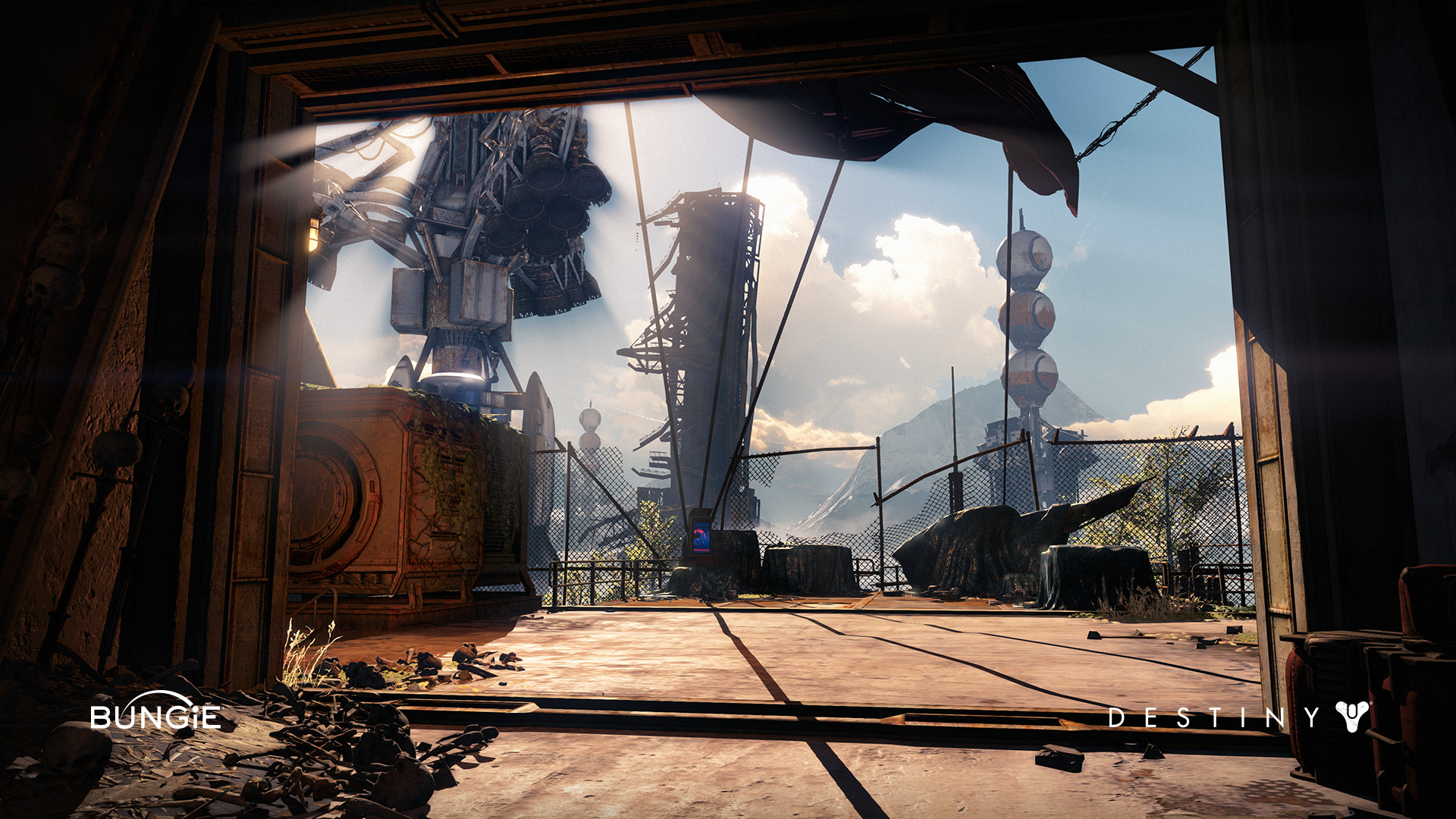
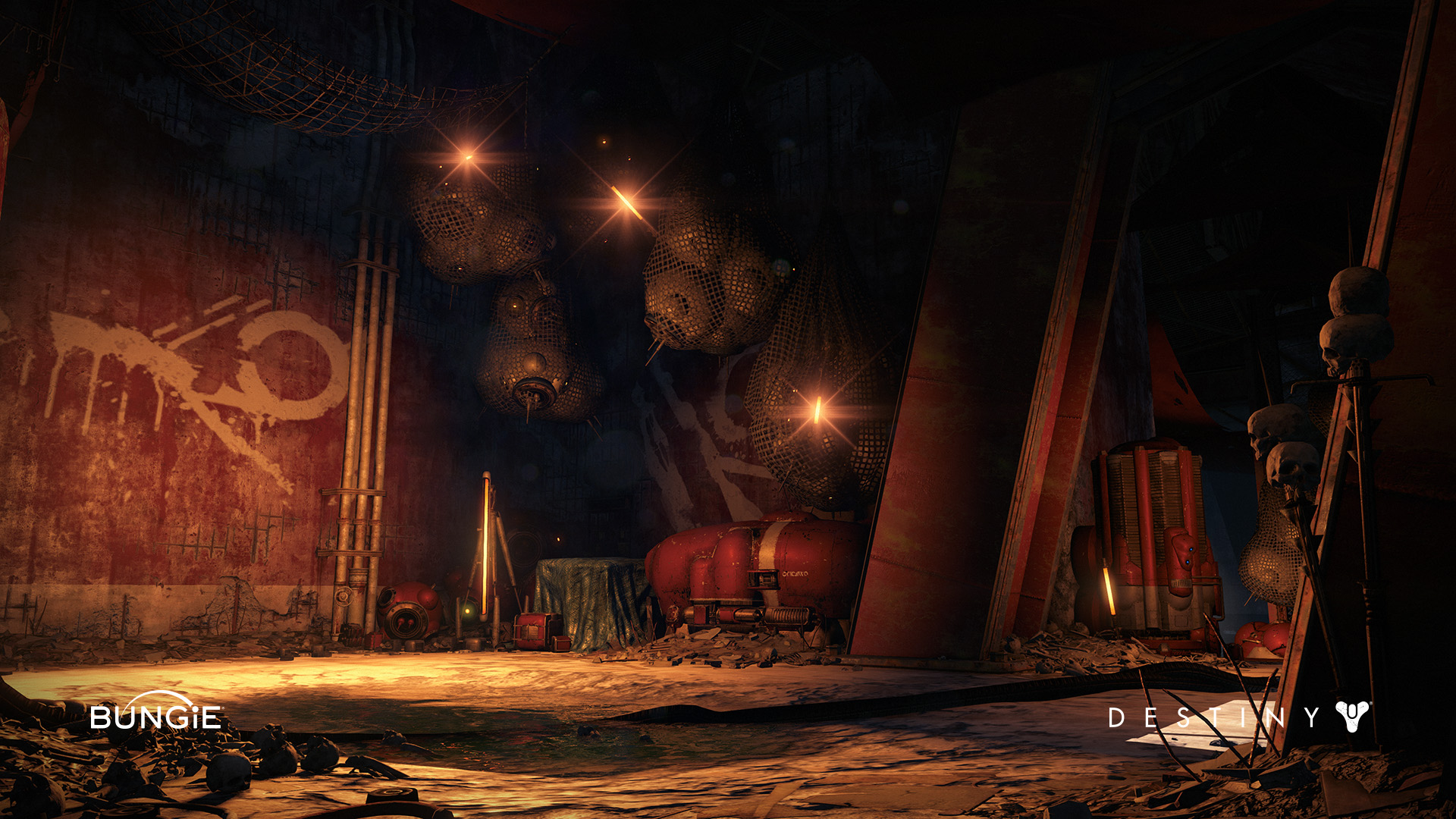
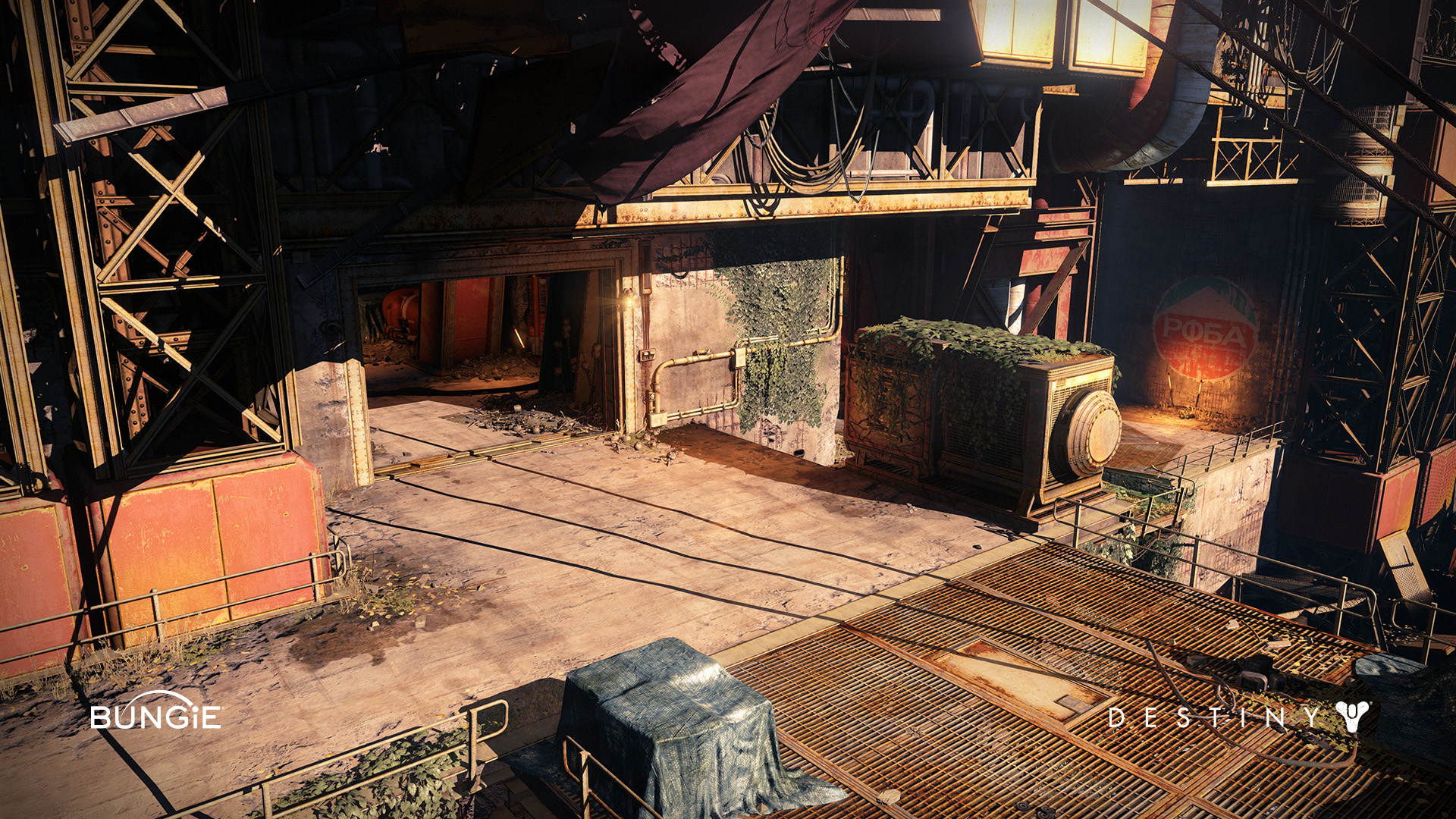
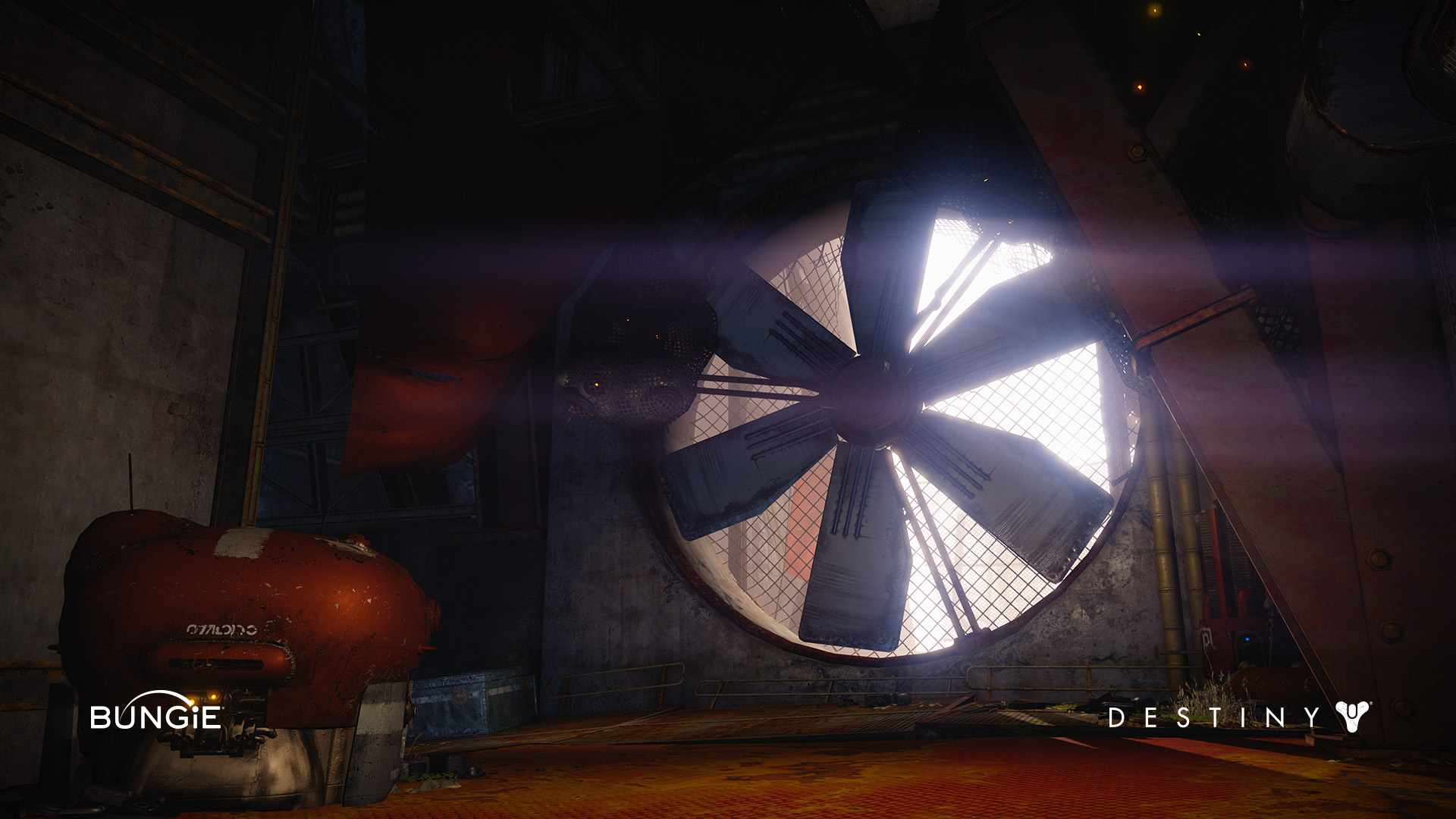
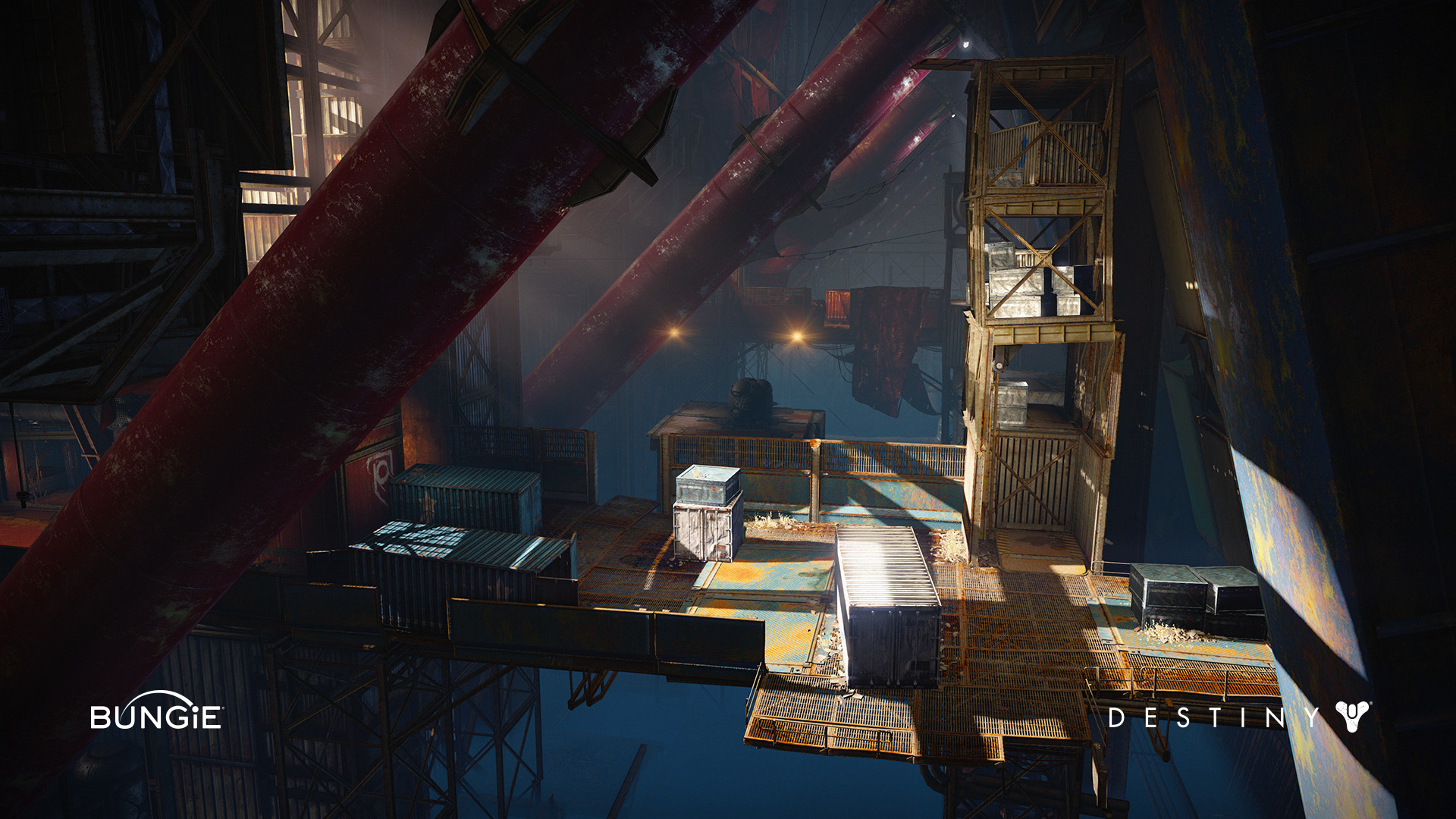
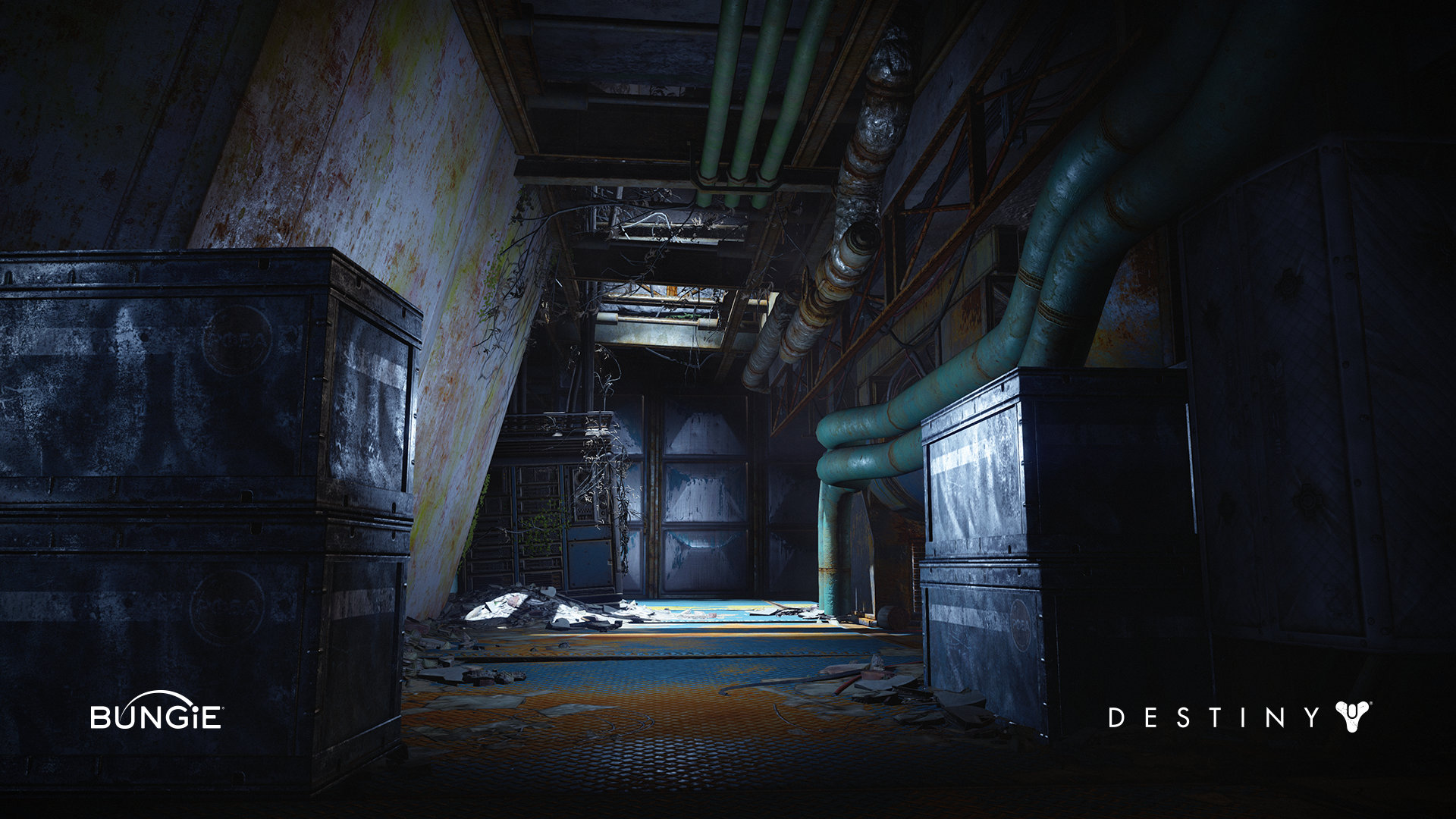
The interior of the Cosmodrome wall is an iconic setting to open the Destiny franchise. With an eye toward its towering scale and the massive red pillars buttressing the angled interior wall, I immediately filed this architectural palette under, "I'm gonna build a Crucible map here someday." Guardians—as they say—make their own fate, and I took matters into my own hands for The Taken King.
Unlike the more traditional archetypes in Thieves' Den and Vertigo, I took a more novelty-focused approach with this space. I didn't just want to pass through this space inside the wall; I wanted to turn it into a playground. I started with a two-bridge layout crossing the central chasm, and began expanding interior into the forgoing more traditional lanes and symmetry to focus its fight across and between two bridges in the central chasm, one low and one high. The layout takes on a somewhat square shape, with spawn points placed alongside the A and C flags at opposite corners at the "top" side of the map, with the B flag centered on the lower bridge.
Beyond the primary routes connecting the two bridges, I placed a pair of jump routes on either side of the interior of the chasm, and spent hours tweaking the height and distance against the base Hunter double-jump to get as fluid a route as possible in each direction. In the end, we added a bit more blocking cover to these routes, which sacrificed some fluidity of motion in service of both better protecting/rewarding flankers for using those routes, and preventing players from posting up on the ledges and adding too much noise to the bridge battles.
Andrew Weldon
Jeff Horal, Tyson Allen, Mick Buckmiller
Mike Poe
Mark Goldsworthy
+
+
+
To help with navigation, I opened up some of the "back" side of the wall to sky, creating an opportunity to utilize bright sunlight in the space. This was also a good opportunity to pull in some Fallen-themed assets, as if they'd entered through the openings on the back side. Jeff and Tyson built on this even further in the art pass, and I love how the red House of Devils banners complement the pillars in both shape and color. The art team also cut some additional holes into the interior wall over the low bridge, allowing some of the sunlight to enter the the space in the main chasm
This map was my first stab at building shell geometry in Max, which was a necessity given the nature of how the interior wall chunks had originally been modeled. I blocked out most of the interior this way, and then took the map a fair way into what would normally be the "architecting" process in the Bungie workflow using the existing finished assets of the Cosmodrome palette. This let me have a bit more fun with the actual visuals, which the env art, lighting, and sky team elevated further to bring home. Of the Destiny maps I built, this one is my favorite visually.
Before launching as a PlayStation exclusive with The Taken King, Sector 618 was one of two maps in rotation at the PlayStation booth at E3 2015, giving players their first taste of Mayhem, a new game mode variant I designed and implemented for The Taken King.
+
+
+
+
"What if Quake, but Destiny?"- Me
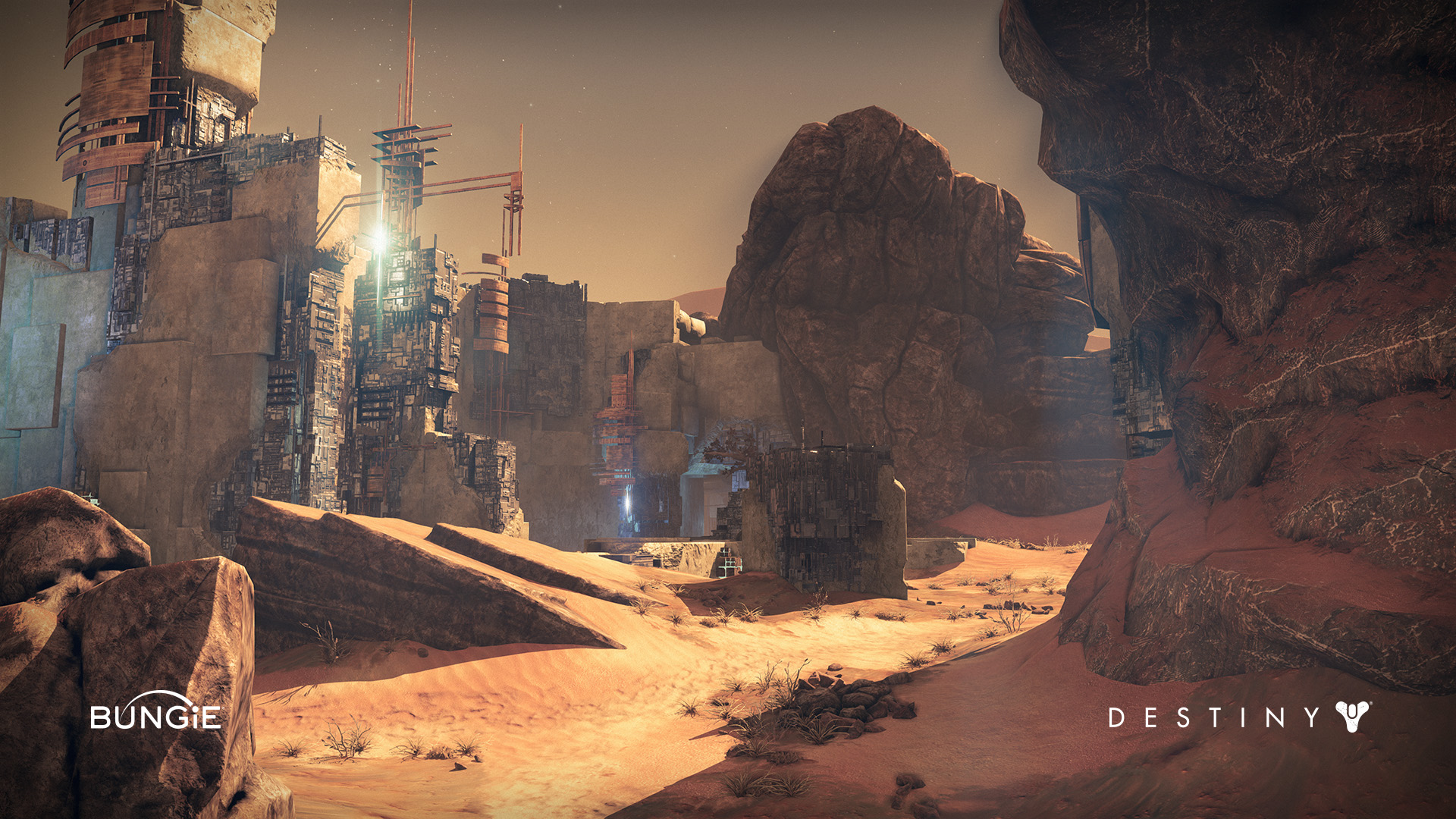
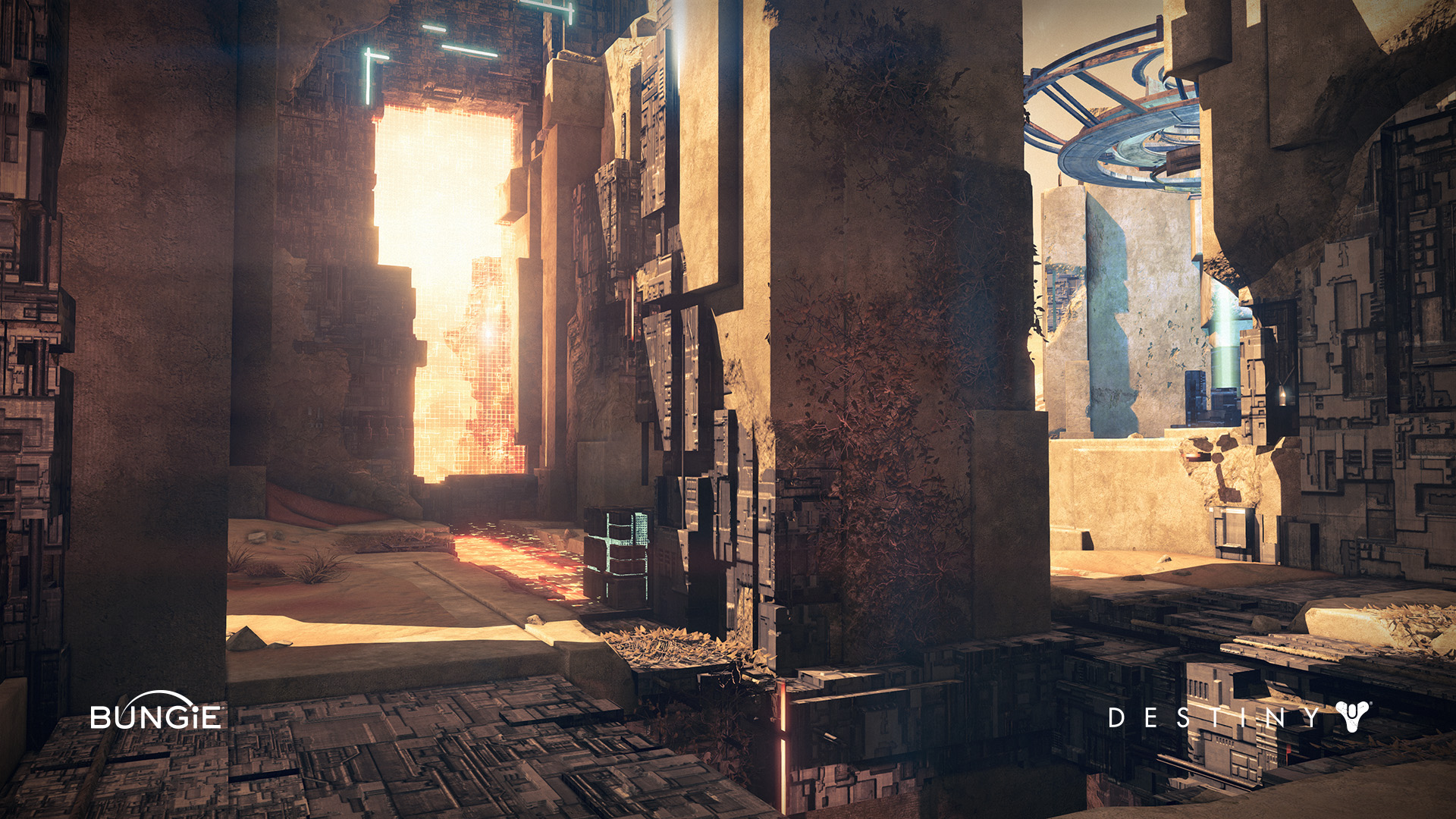
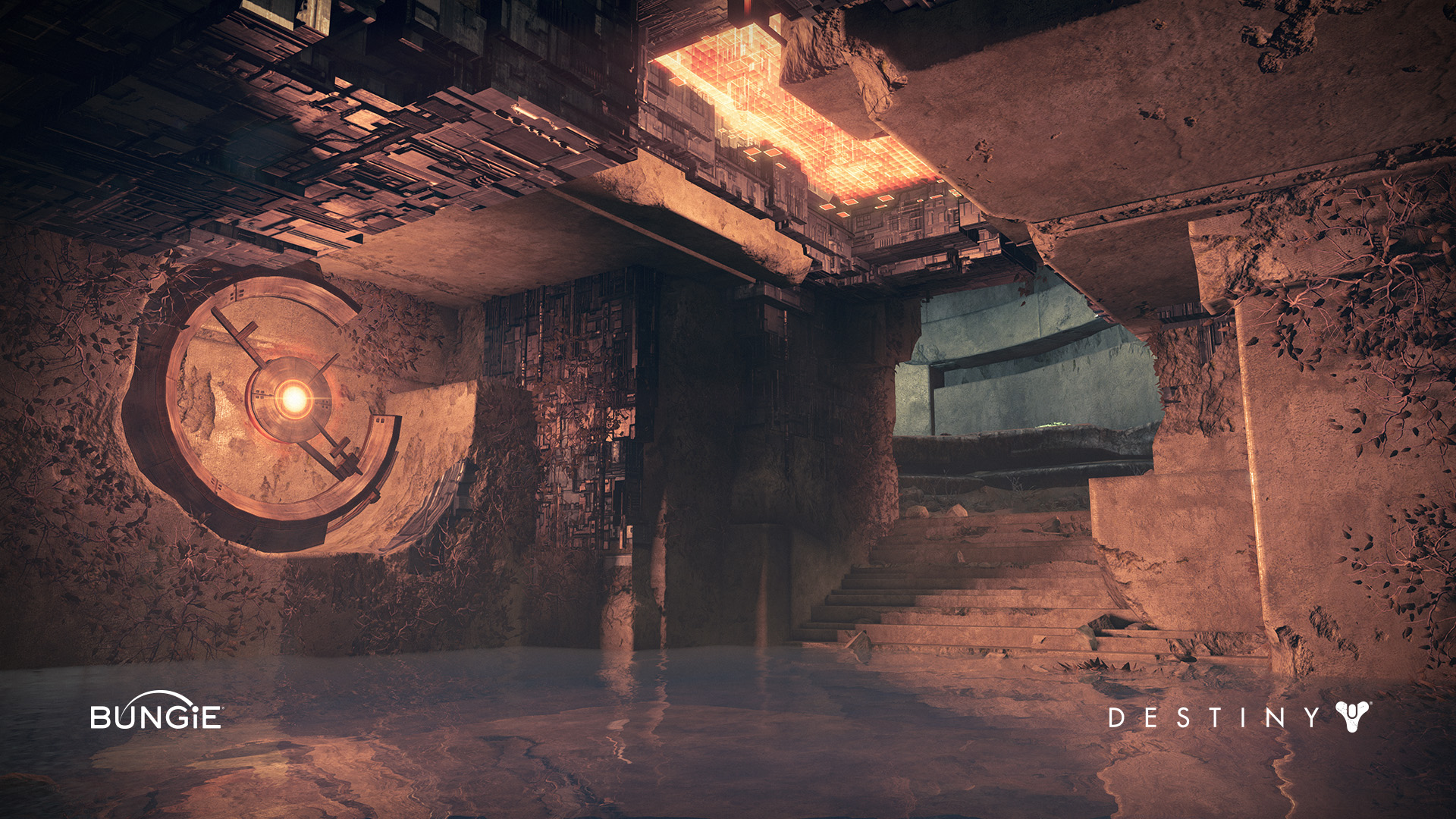
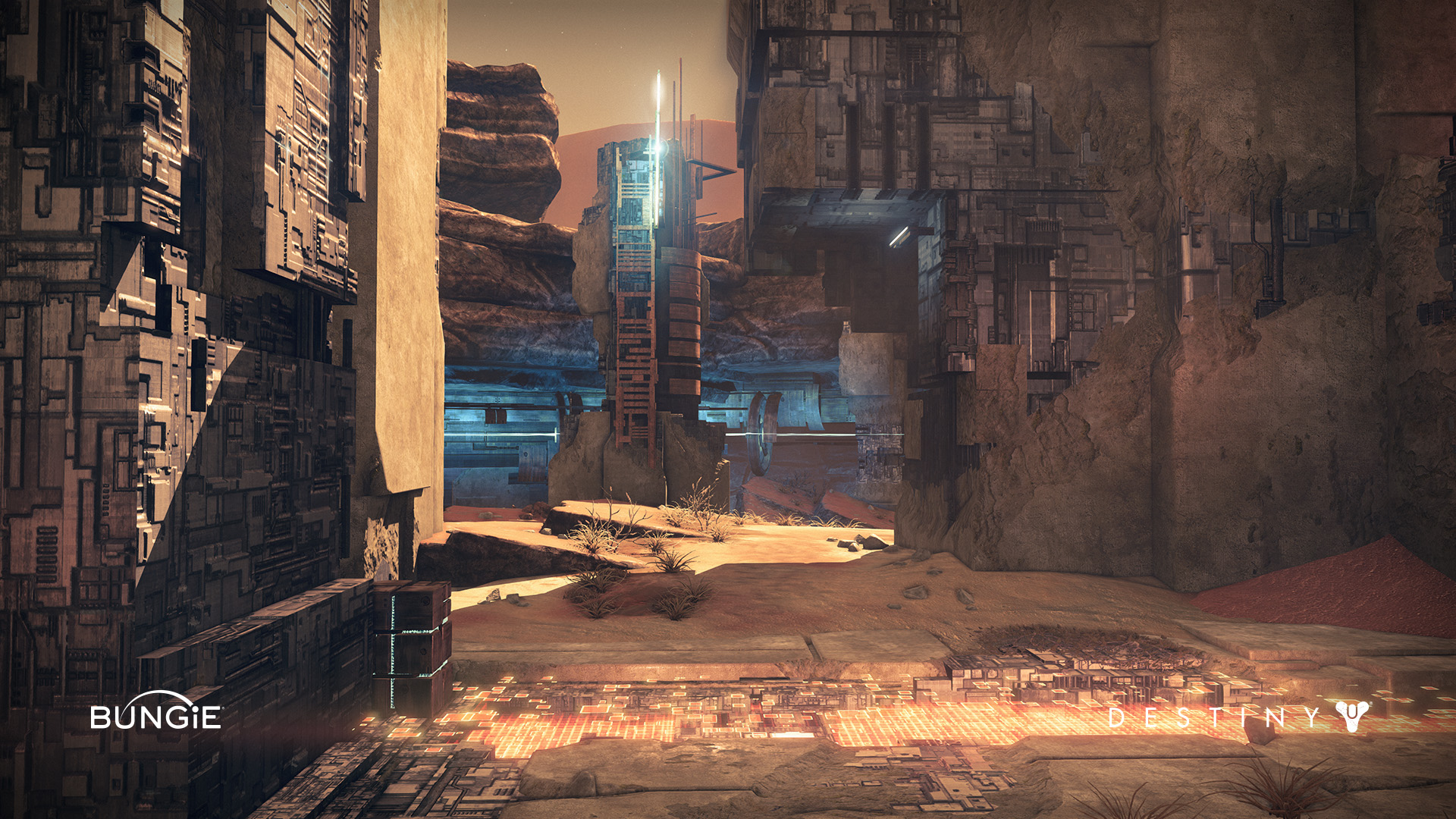
By the time I started building The Timekeeper, I had been building nothing but terrain-based vehicle maps for the better part of 4 years: first for Starhawk, followed by Destiny's then-largest maps in Bastion and First Light, I figured it was only fair that my next map be Destiny's smallest.
Out of the gate I wanted to get some classic sweeping deathmatch loops like you might find around the perimeter of Quake III's Campgrounds, and applied this to an idea of an over/under figure-8 type shape. This grew into the part of the "basement" of the map and its open drop-down, giving players several routing options through the center of the map.
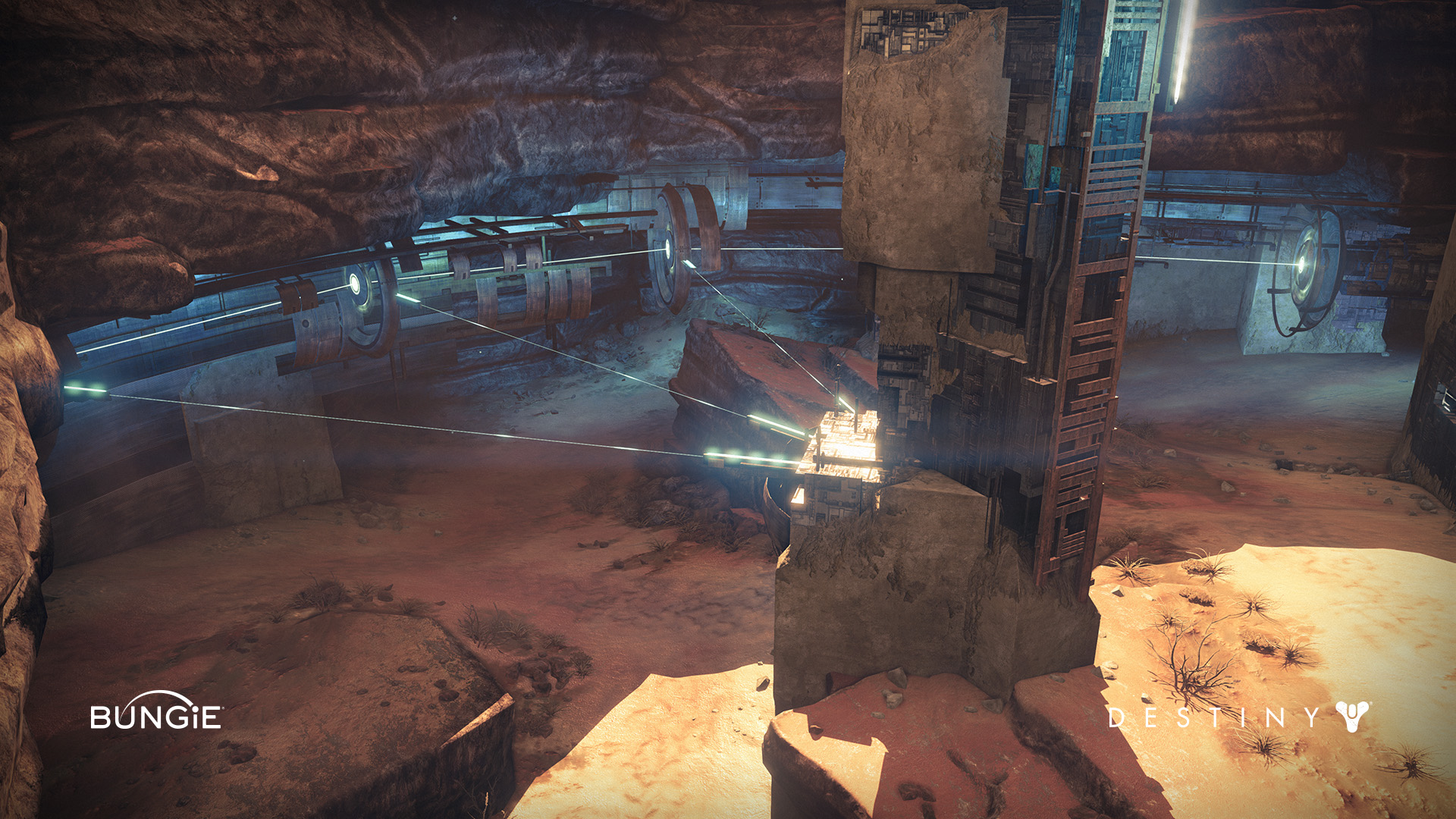
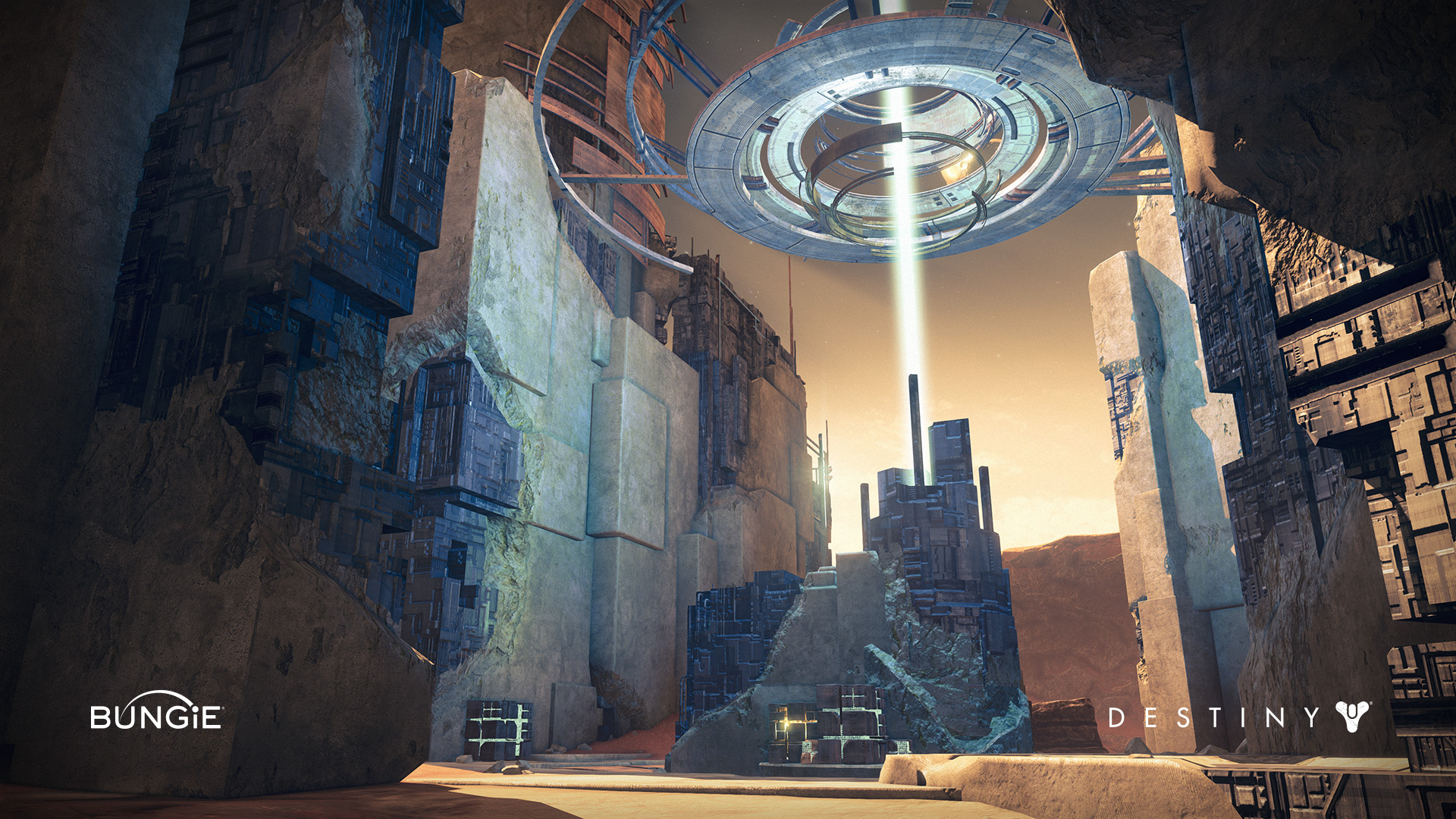
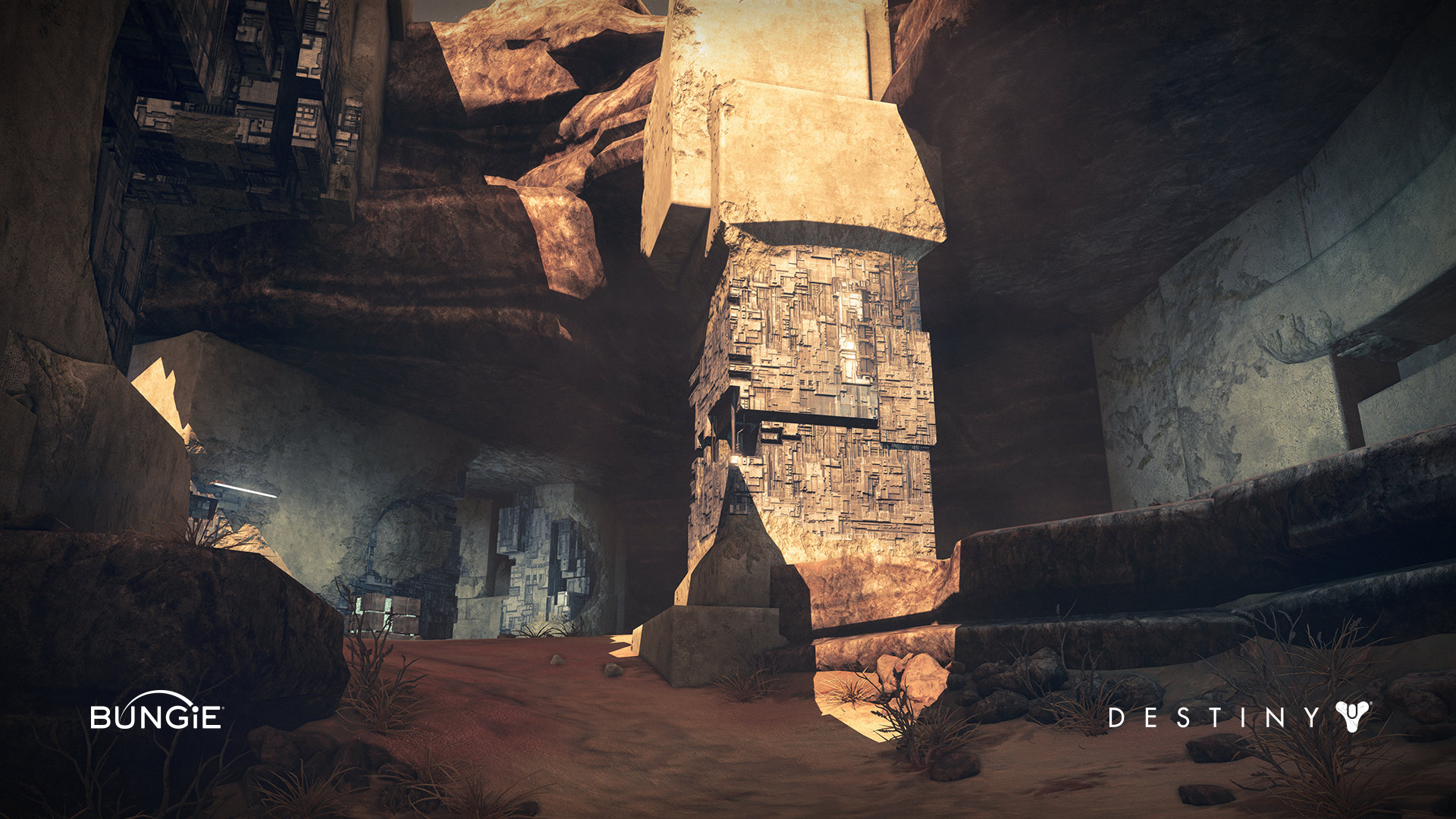
Another idea that seeded this level was "Vex Crop Circles." These circles, while somewhat softened over time and iteration, provided the anchors and flow lines of the initial figure 8 I started with. You can still see the circular forms in the "interior" rock overhangs, under the animated funky Vex machine thing—whose pulsing VFX I parsed as "clock," hence: "Timekeeper"—and the outside pool area.
Andrew Weldon
Todd Juno, Mick Buckmiller
Thad Steffen, Aubrey Pullman
Mark Goldsworthy
+
+
+
Todd Juno returned as my environment art partner for this map. I was familiar enough with the Vex + Mars palette to get pretty far out of kitbashing Vex stone and metal into rocks, and Todd elevated this further by bringing in some fantastic elements including the lasers in the "interior" spawn and some incredibly sculpted windswept dune terrain on the outer perimeter.
As a small asymmetrical map, we erred on the side of keeping this map in playlists like Skirmish, Salvage, and Rumble—where it was a regular fixture of Weekend Champion⮺ matches—and didn't think it would be a good choice for the new Elimination mode featured in Trials of Osiris. We didn't support switching sides at this point in Destiny's lifespan, and we didn't want to end up with players grouchy about a lopsided result on their way to the Lighthouse.
When Crimson Days launched, however, we figured this was the perfect map for a fun 2v2 elimination variant—and then discovered in our telemetry that this was one of the most balanced maps in the game, with a win rate within a tenth of a percent from 50/50. I wish we had ported it to Destiny 2, but I suspect its temporary status as a platform exclusive held it back from wider play and recognition.
Regardless: Out of every level I've ever built? I think this is my favorite.
The Timekeeper debuted as a PlayStation exclusive in Destiny: House of Wolves on May 19 2015, and later became available to all players on all platforms on Sept. 8 2015.
+
+
+
+
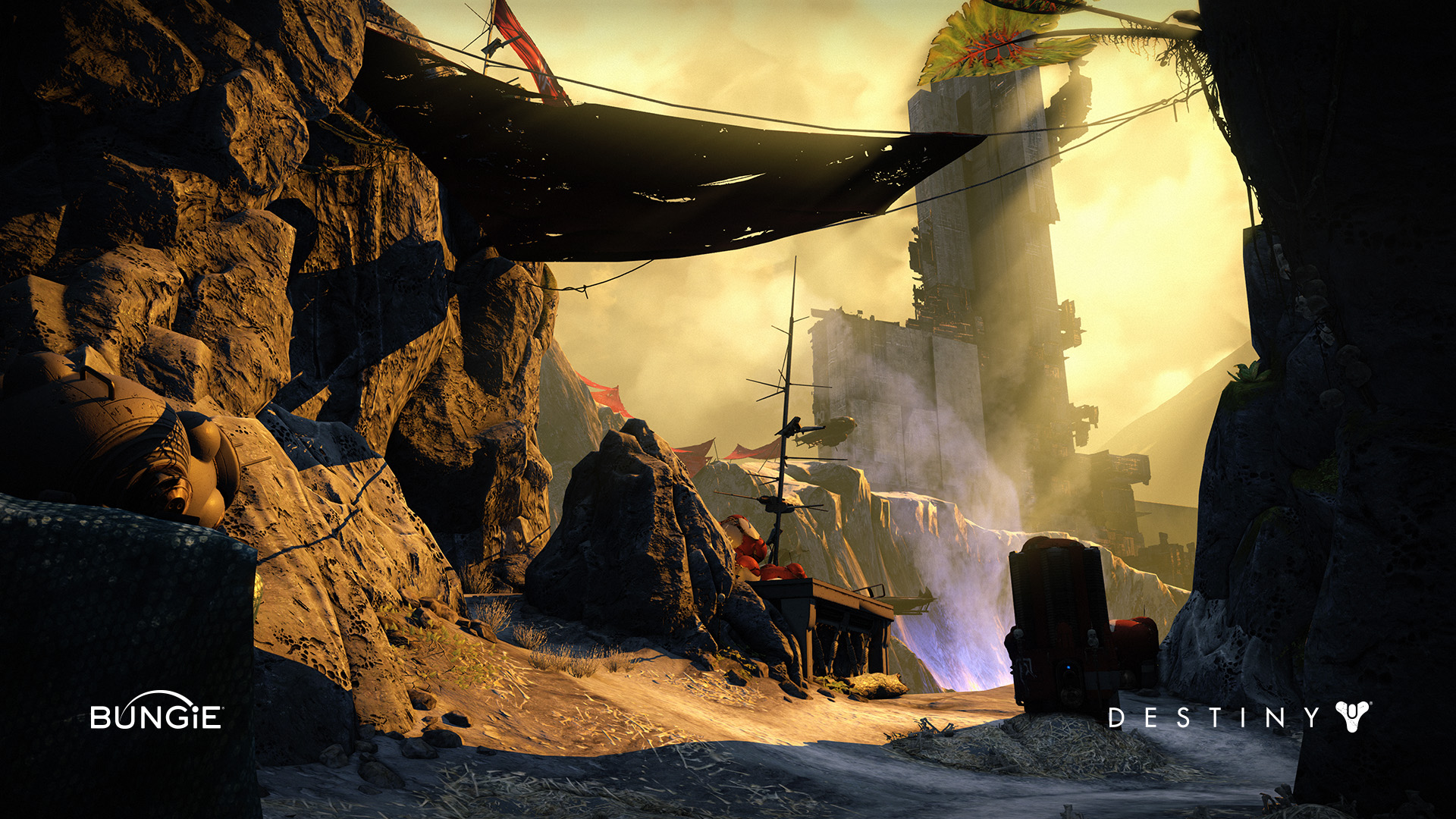
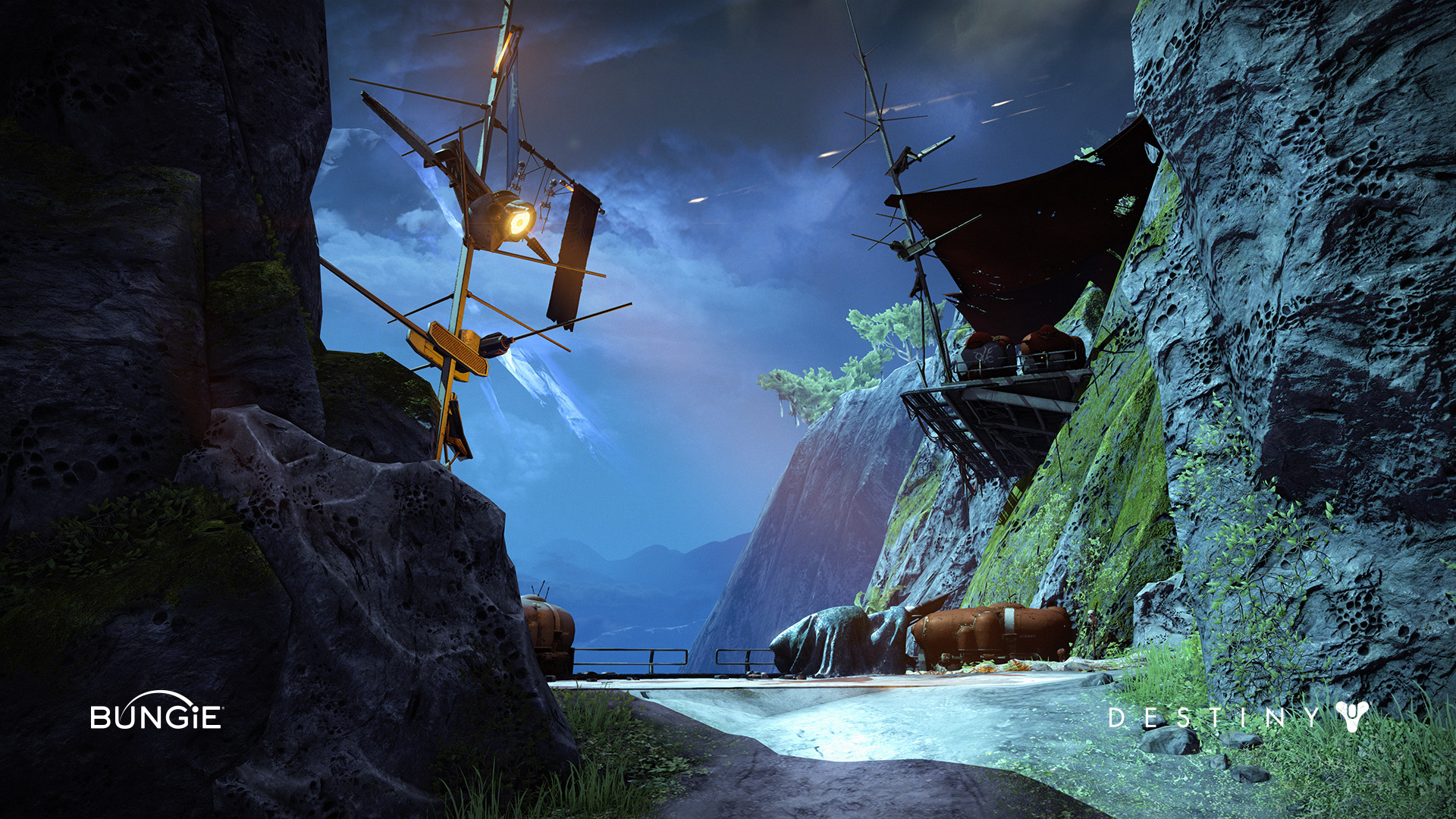
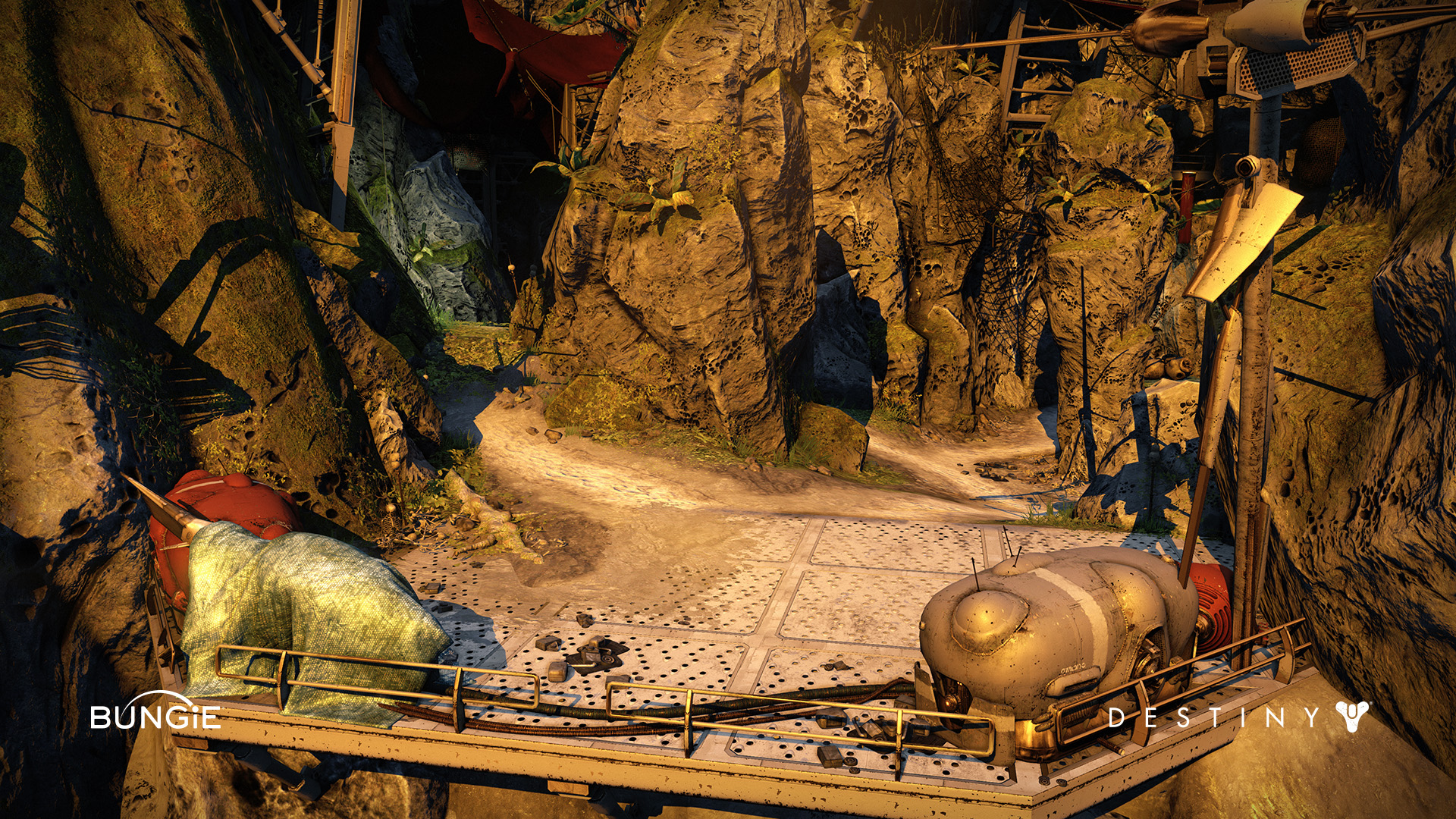
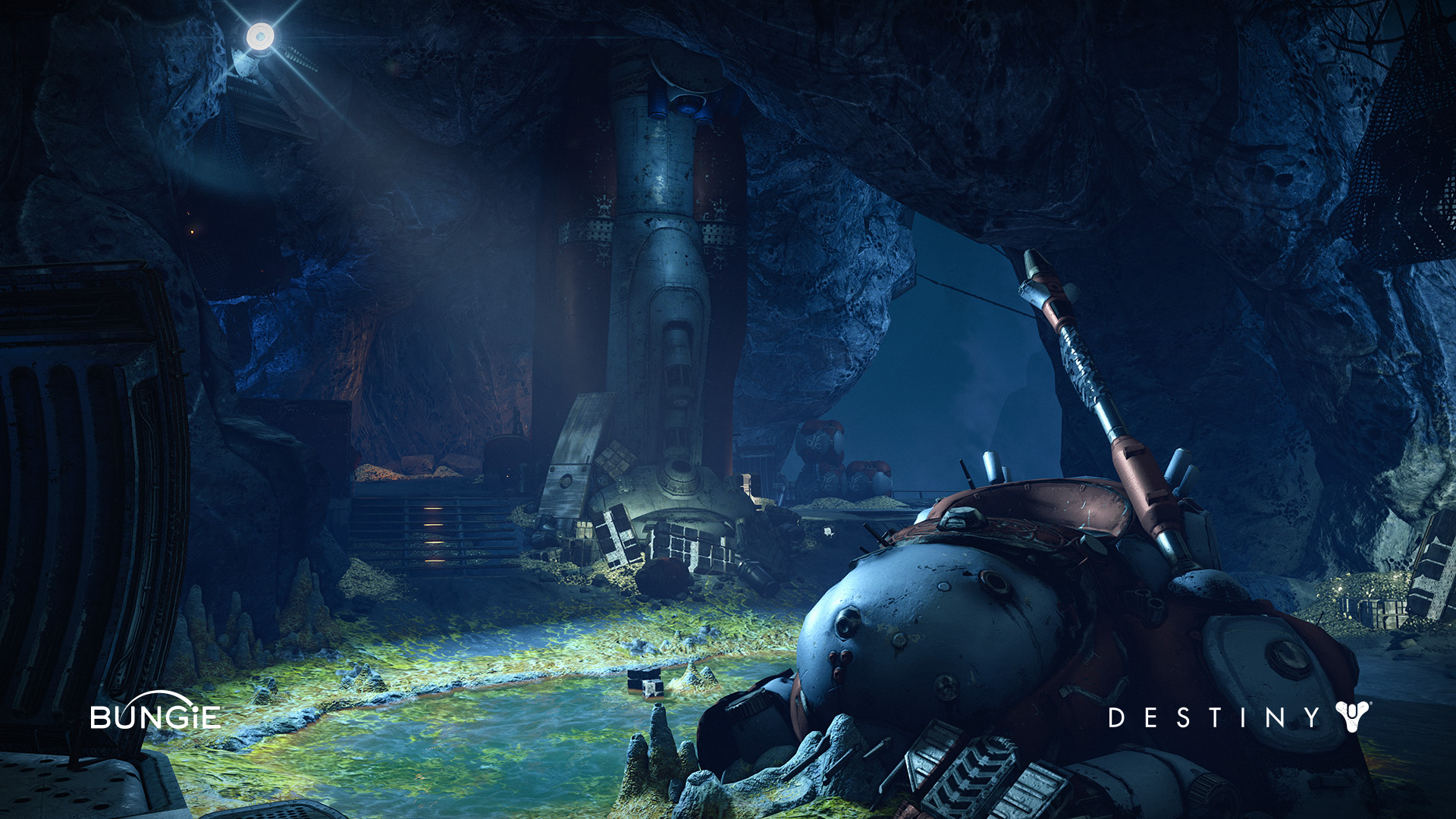
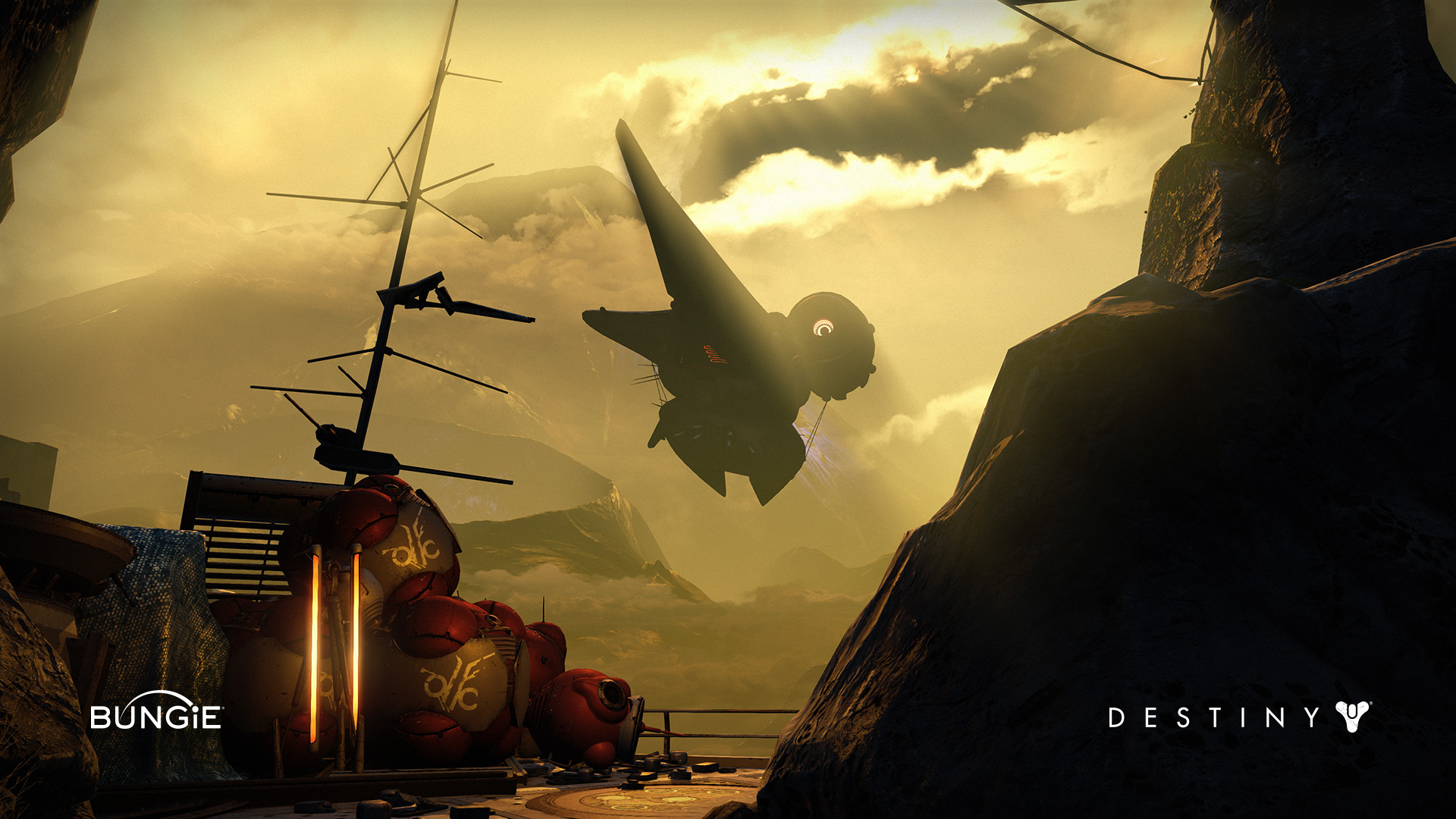
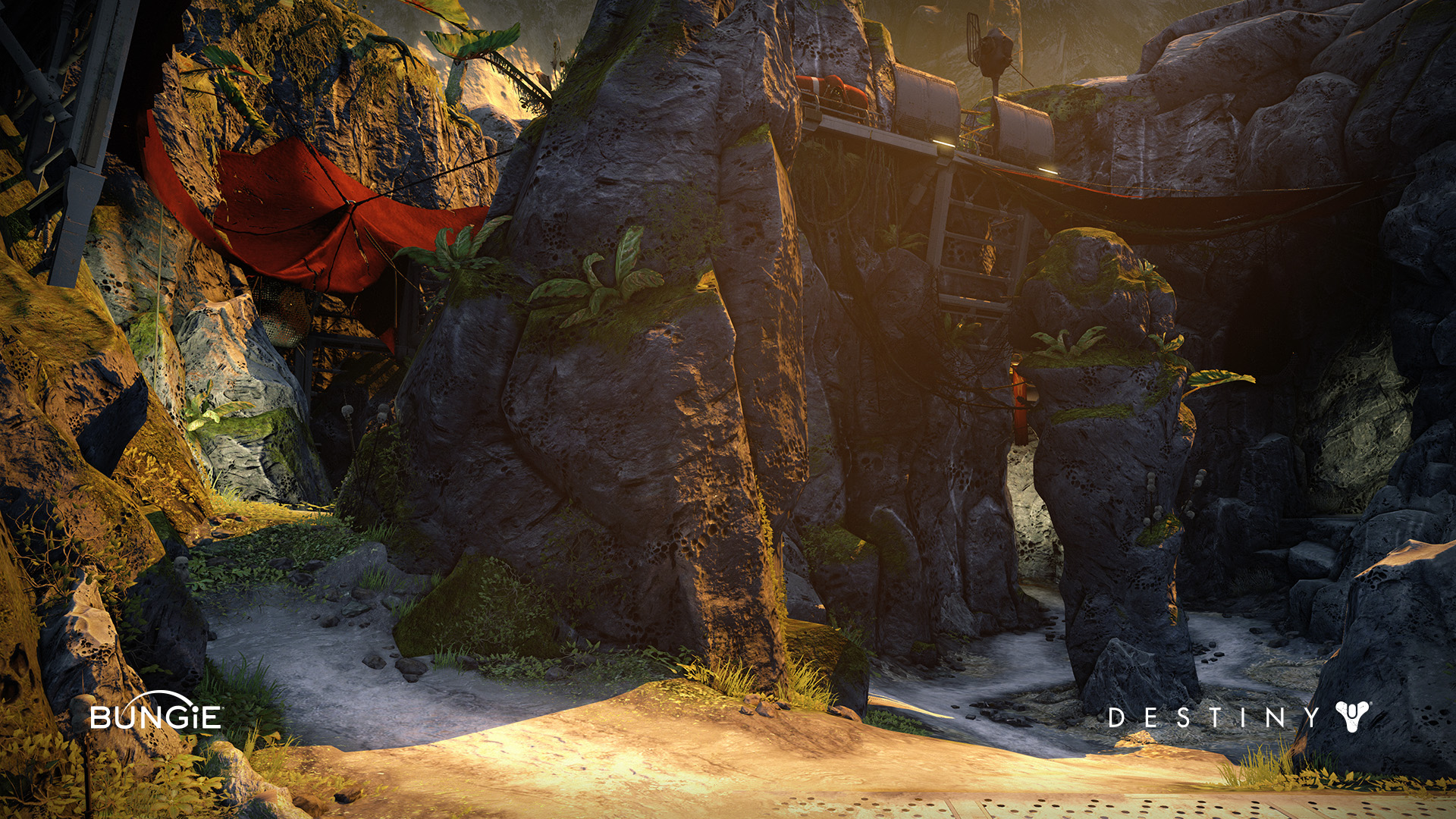
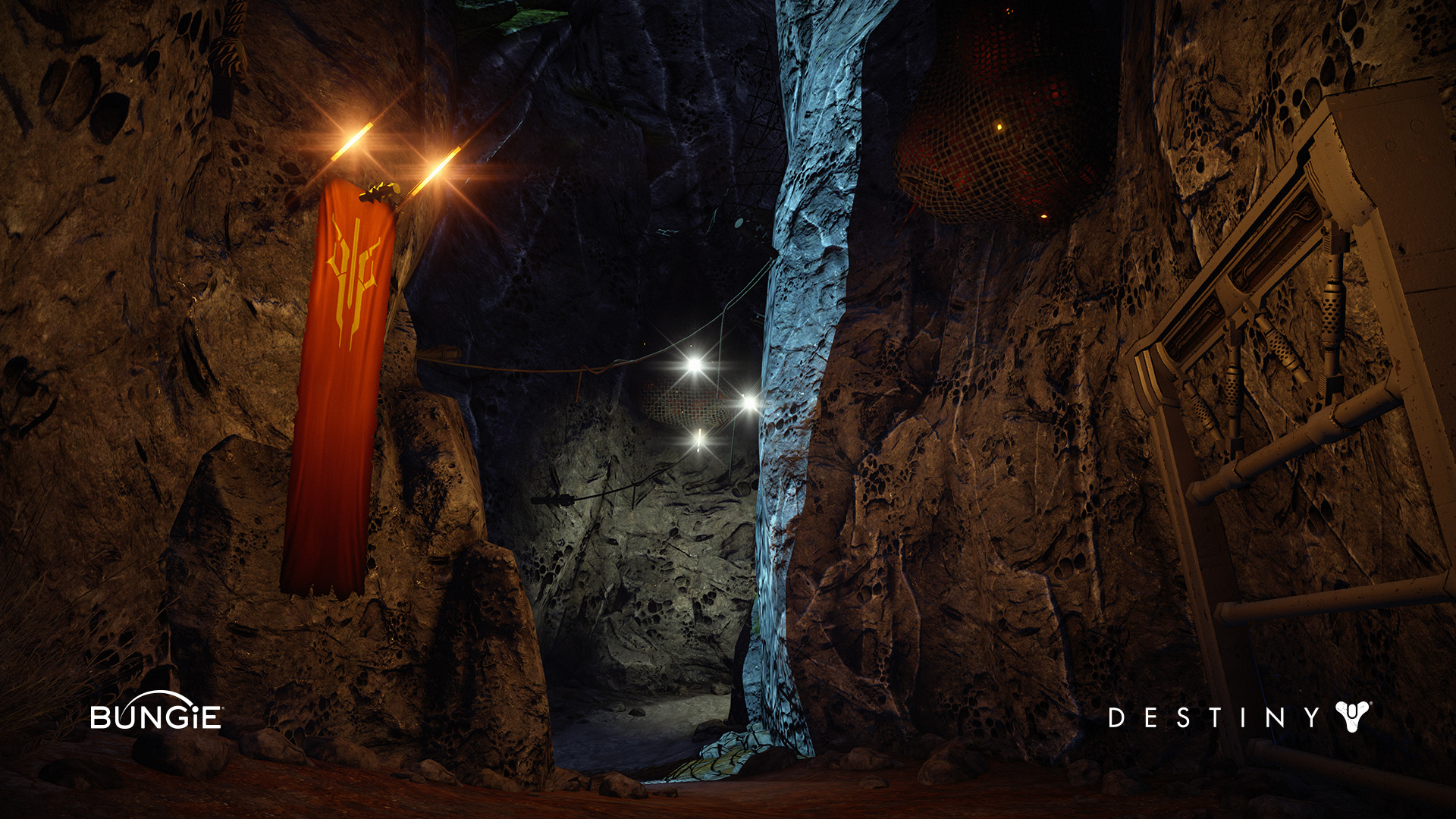
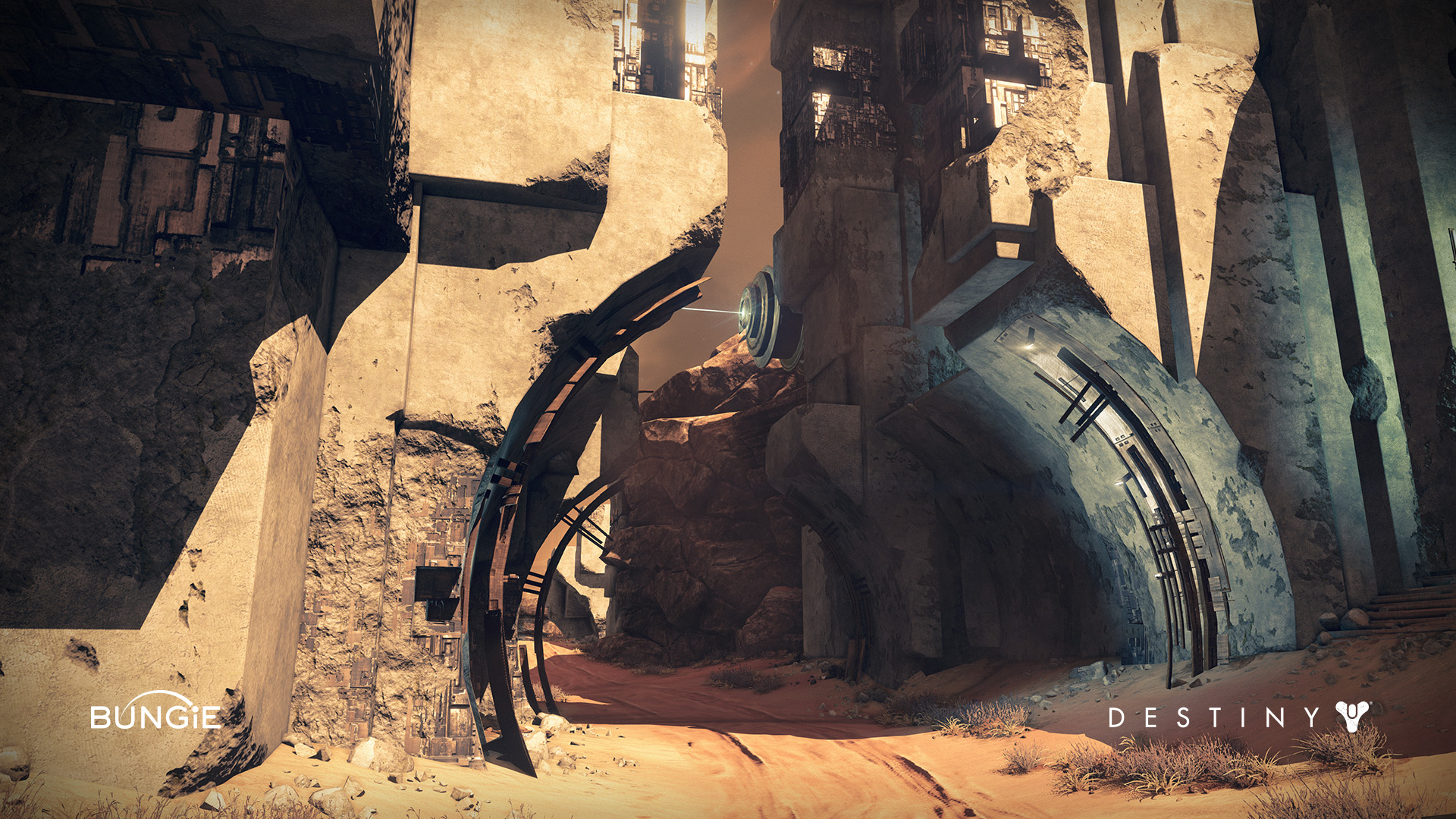
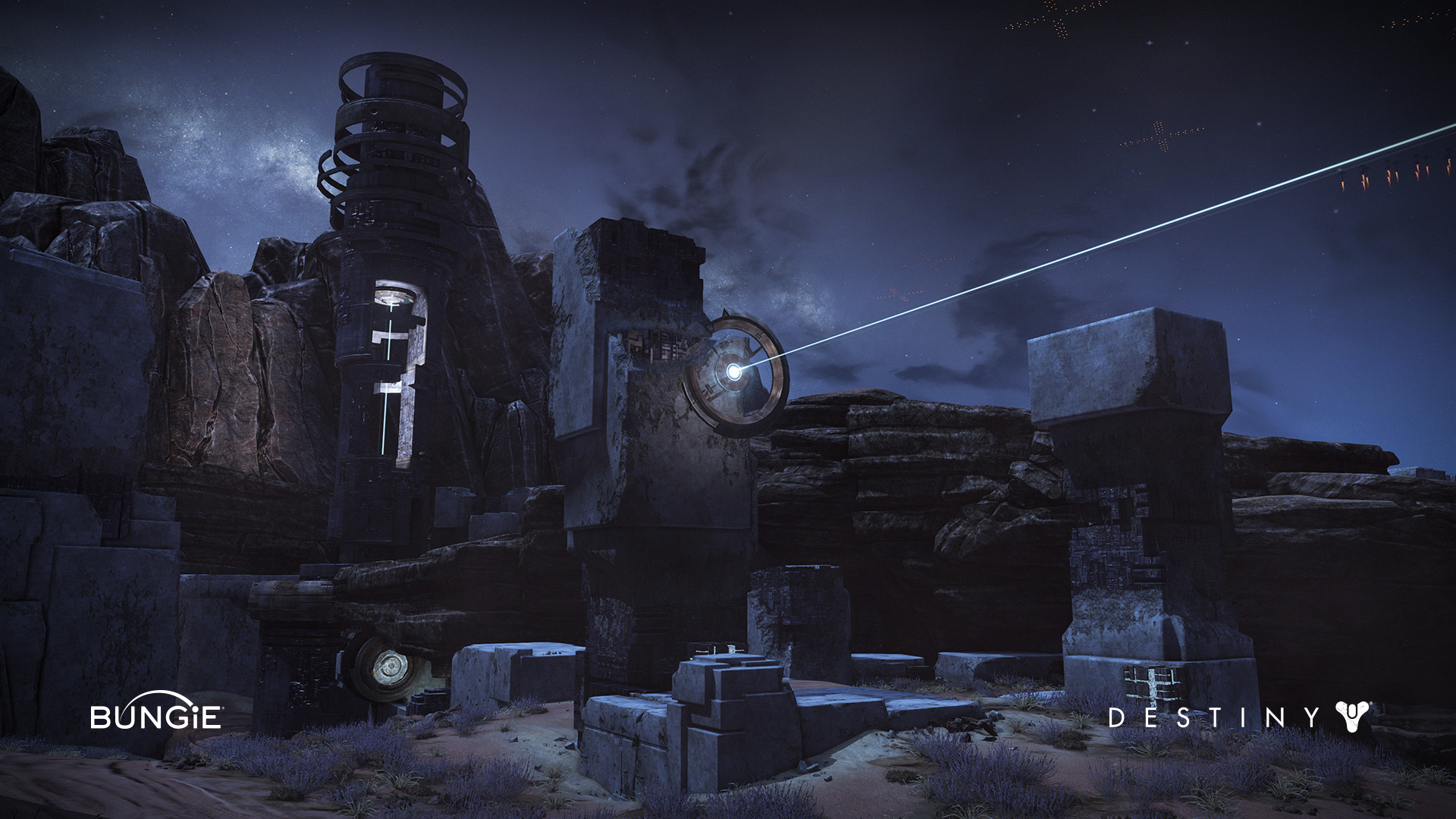
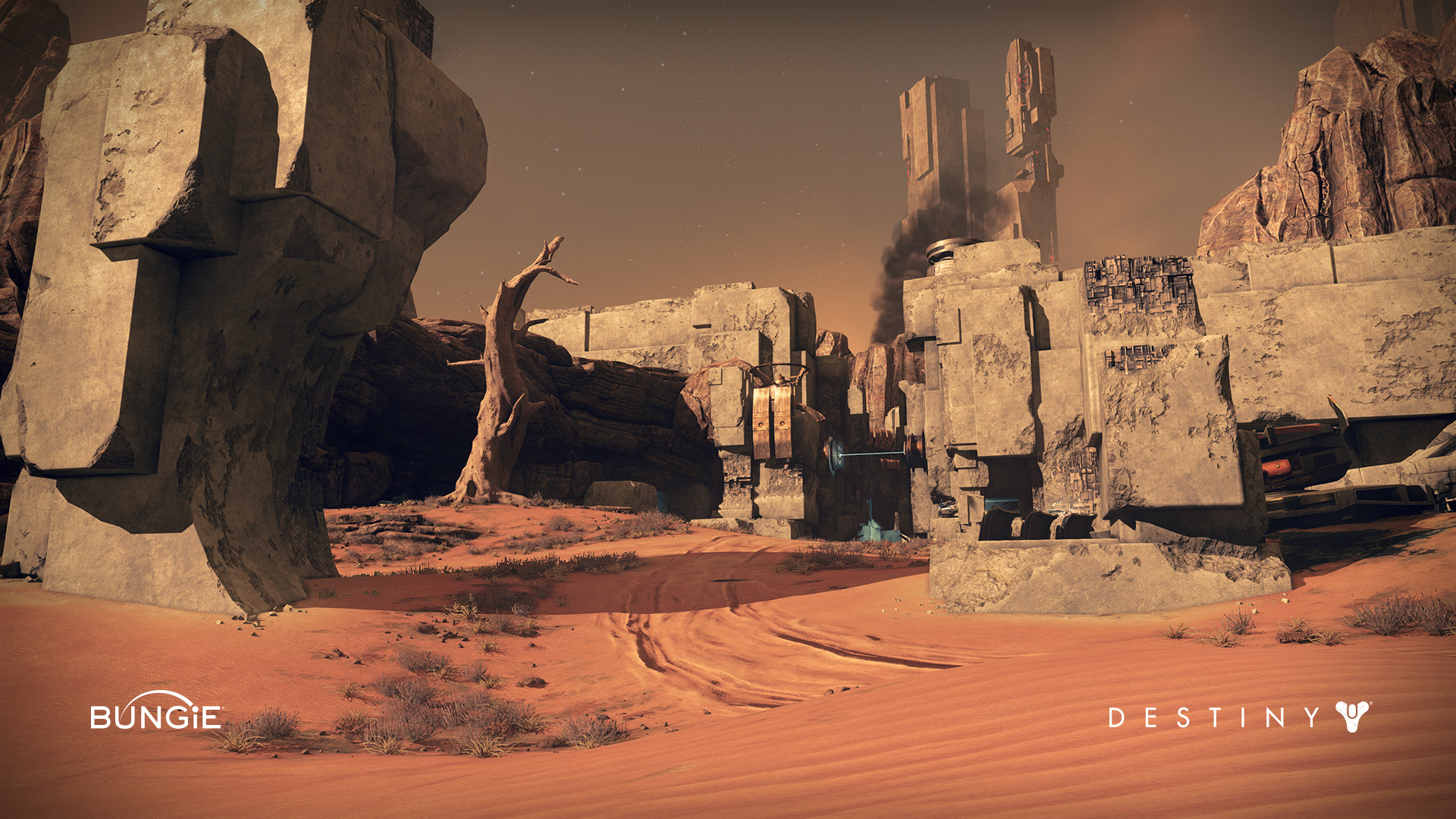
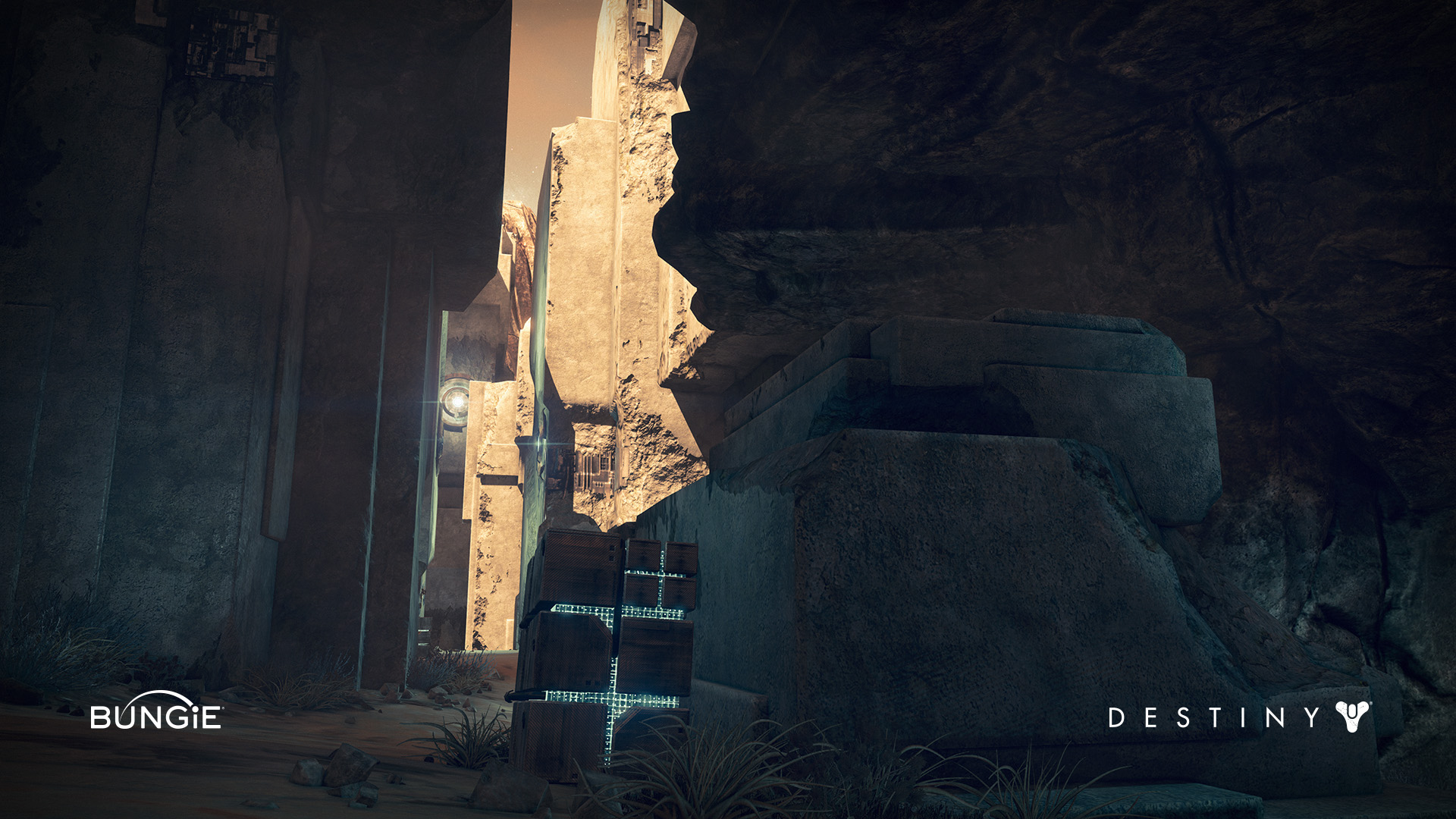
I started building the blockout for Thieves' Den along the tail end of work on The Timekeeper, inspired by some of the Vex-inhabited caves of Venus from the Destiny campaign. As with most maps, I had an "anchor" idea where I liked the idea of turning a docked Skiff into the centerpiece of a combat area, and then wanted to run with the volcanic sulphur cave vibes of the Venus natural palette.
While sculpting the terrain was easy enough, the Venus rock meshes proved a bit more complicated to build interior/cave-y sections than their Mars palette counterparts, so I ran into some hiccups trying to bridge exteriors to interiors within the natural palette. My first draft of trying to anchor the docked Skiff to the outer edge of the level also didn't really do what I wanted - I was trying to recreate the shape of the skiff in rocks and terrain on the interior spawn point/capture zone space, and in the end shifted it to the center. But, if you look really close you can still see some of the forms the original Skiff scaffolding I built reflected in the exterior terrain.
Andrew Weldon, Blake Low, Mick Buckmiller
Blake Low, Todd Juno, Josh Markham, Francisco Cruz, Mick Buckmiller
Thad Steffen
Isaiah Sherman
+
+
+
We had a large influx of art support for the House of Wolves map pack, and several artists joined the fray, each taking over different sections of the map. Blake Low was on point for environment art, and helped flesh out some final layout tweaks in which some landmarks and themes shifted from one area of the map to another in the broader art pass. Josh Markham took what had been an interior sulphur cave/Fallen treasure hoard of a B flag and turned it into an open volcanic crater, with the treasure hoard/scrap cave idea shifting to the interior spawn under Blake's purview.
I'm a sucker for big ships flying overhead, and always enjoyed the roar of a Fallen Ketch flying overhead as part of Destiny's public events. With some assistance from the VFX team (mostly to make the flash of the ship appearing not totally blinding in the middle of a firefight), I added a random chance that you'd see a Ketch warp in and fly low over the play space. It was a slight nod to earlier "map events" proposed for Destiny's launch maps that never fully materialized for both scope and gameplay reasons.
Thieves' Den launched with Destiny: House of Wolves on May 19, 2014 and later became free to all players in the pre-Taken King 2.0 content update on Sept 8, 2015.
+
+
+
+
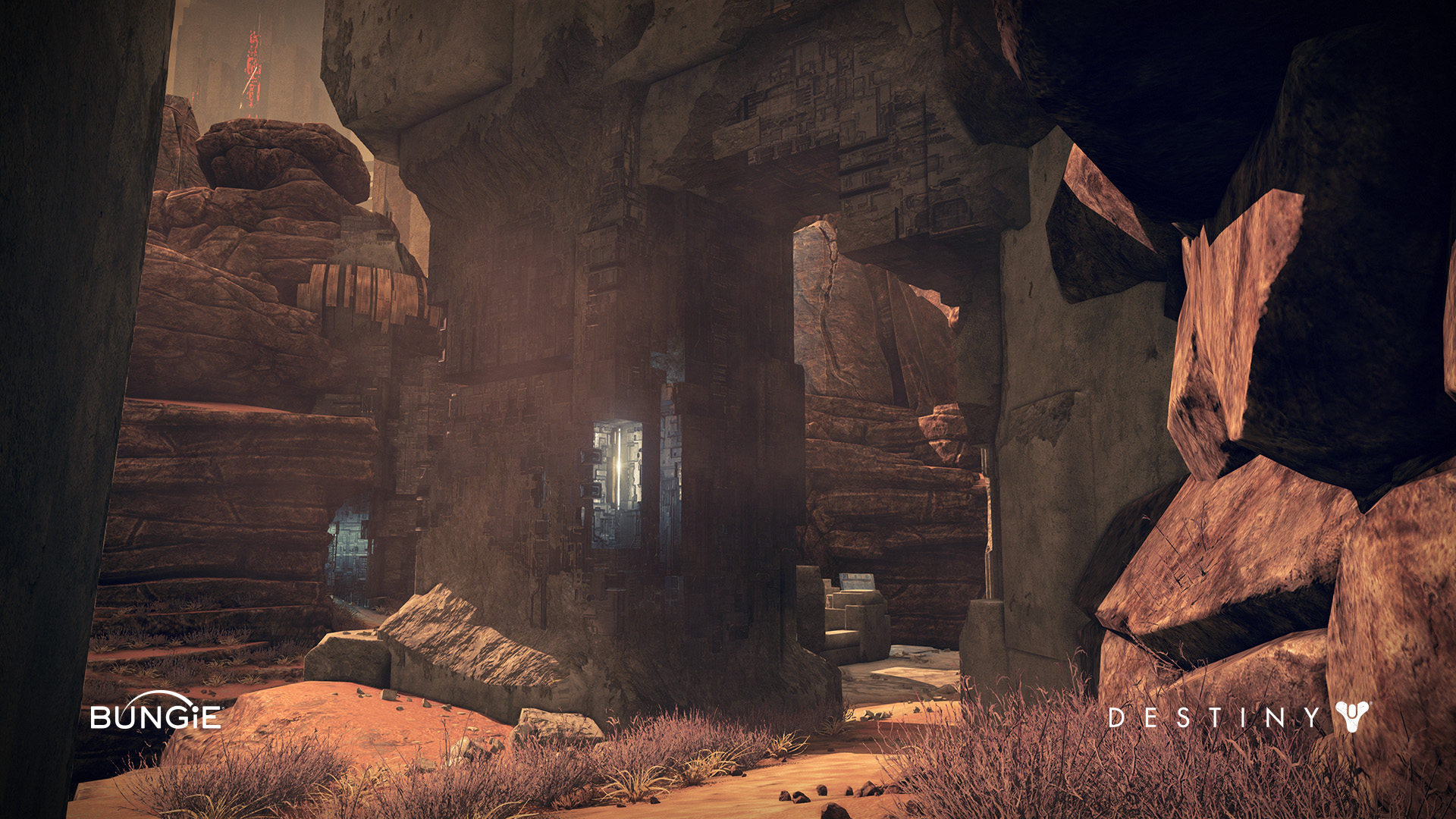
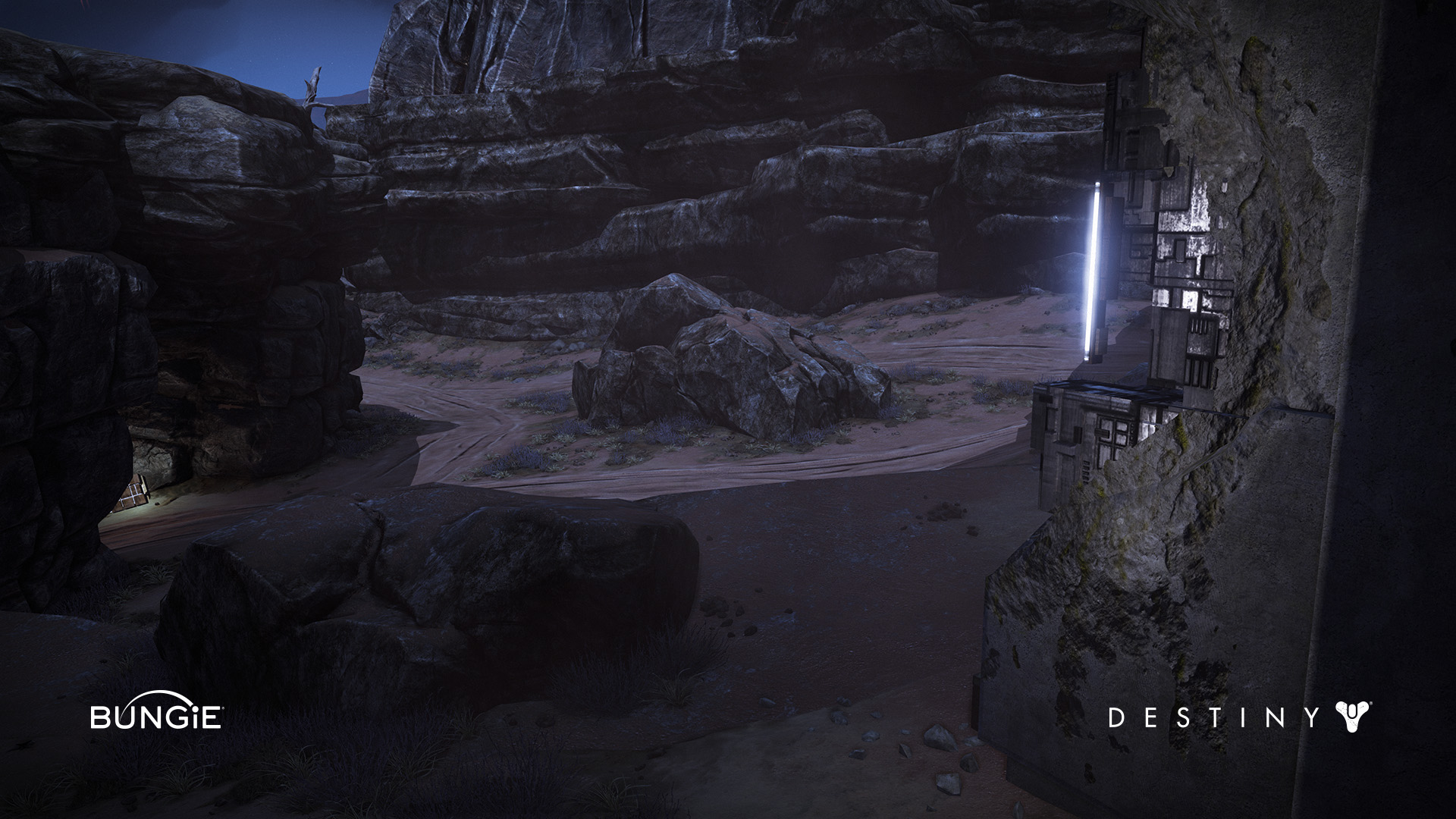
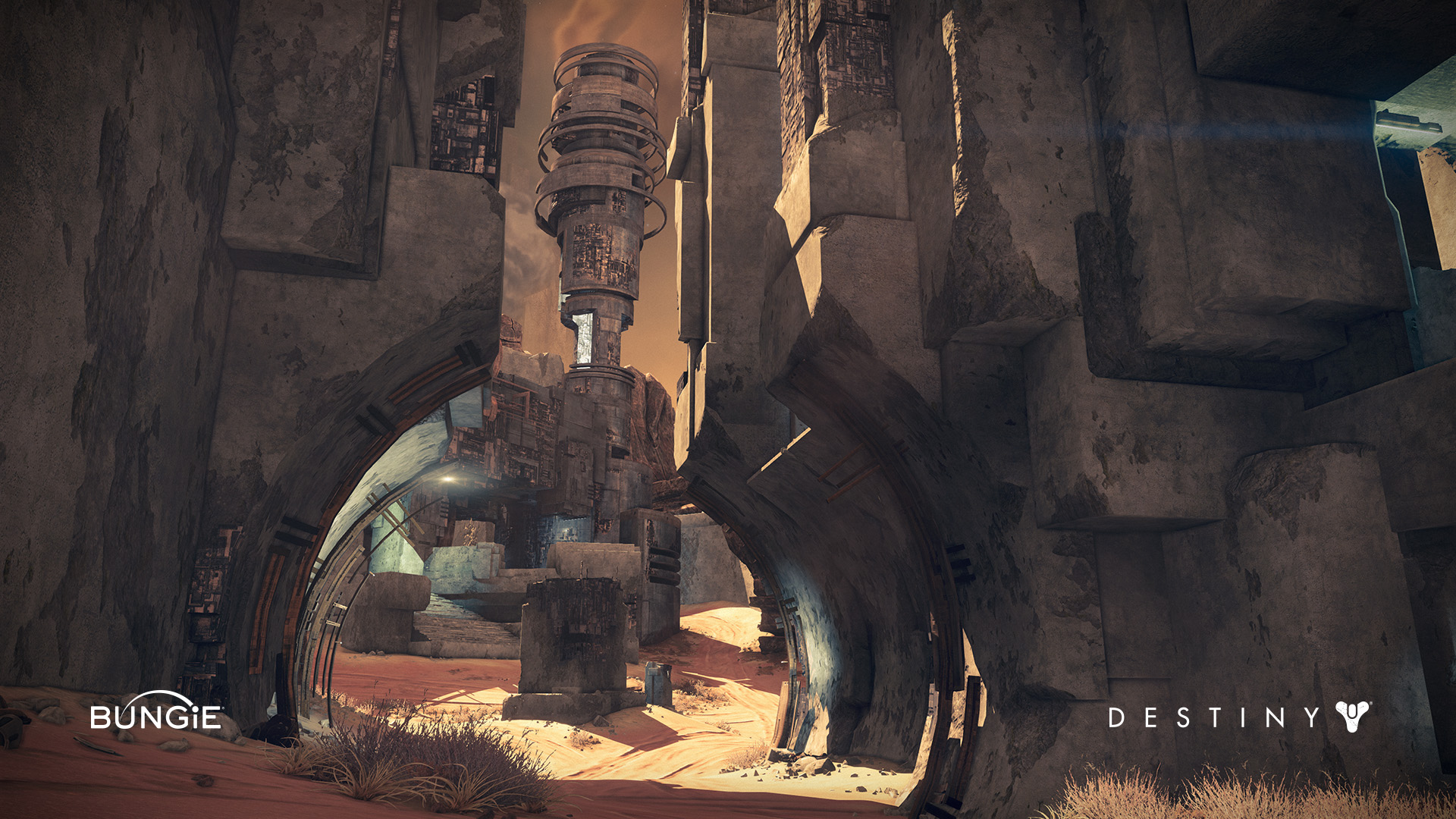
Bastion was the first level I built at Bungie, and begain with a whiteboard list of assorted map palette and theme ideas as we worked to figure out our launch offering. My experience on Starhawk made a vehicle-focused map a natural fit, and I took the "Mars Battle" concept of a Vex structure that had been attacked by Cabal forces.
The map began with the dividing wall structure, intended to be the outer fortification of a deeper Vex structure. The "main entrance" was a narrow vertical gap between two sections of wall, with a wider circular entry point at the base. This served as the primary vehicular route between the "interior" and exterior of the map, with a secondary route ramping up and to the left into the natural terrain.
Running perpendicular inside this gap is an elevated route that allows players to run—mostly—protected from the exterior spawn point into the B flag zone, jumping across the vehicle path to get there. I called this the "Enemy at the Gates" jump, for those familiar with the film, as I was very intentionally serving players up on a platter to snipers and the occasional Interceptor cannon volley.
Andrew Weldon
Todd Juno, Mick Buckmiller
Thad Steffen, Aubrey Pullman
Mark Goldsworthy
+
+
+
I sculpted and fine tuned the terrain in-editor, using a sleeker and lower-to-the-ground Warthog-style vehicle as my baseline for getting the right smoothing on turns and slopes. Driving around felt great. Then the vehicle was cut. Fortunately, what worked well for that vehicle also worked well for Fallen Pikes and Cabal Interceptors, now the primary vehicles in the map.
At launch, Bastion and First Light were part of the standard 6v6 Control playlist. Bastion featured a couple Pike spawns and an Interceptor spawn in the middle as something of a "power weapon," with spawning rules similar to Heavy Ammo crates.
Later, we consolidated the three vehicle maps—now including Coolie Calihan's Skyshock, released in Destiny: The Dark Below—into a "Combined Arms" playlist, utlilizing Control gameplay with increased vehicle presence - now teams each started with two Pikes and an Interceptor. This allowed the vehicle maps to more properly shine while also allowing the standard Control playlist to play a bit more predictably with non-vehicle maps.
+
+
+
+
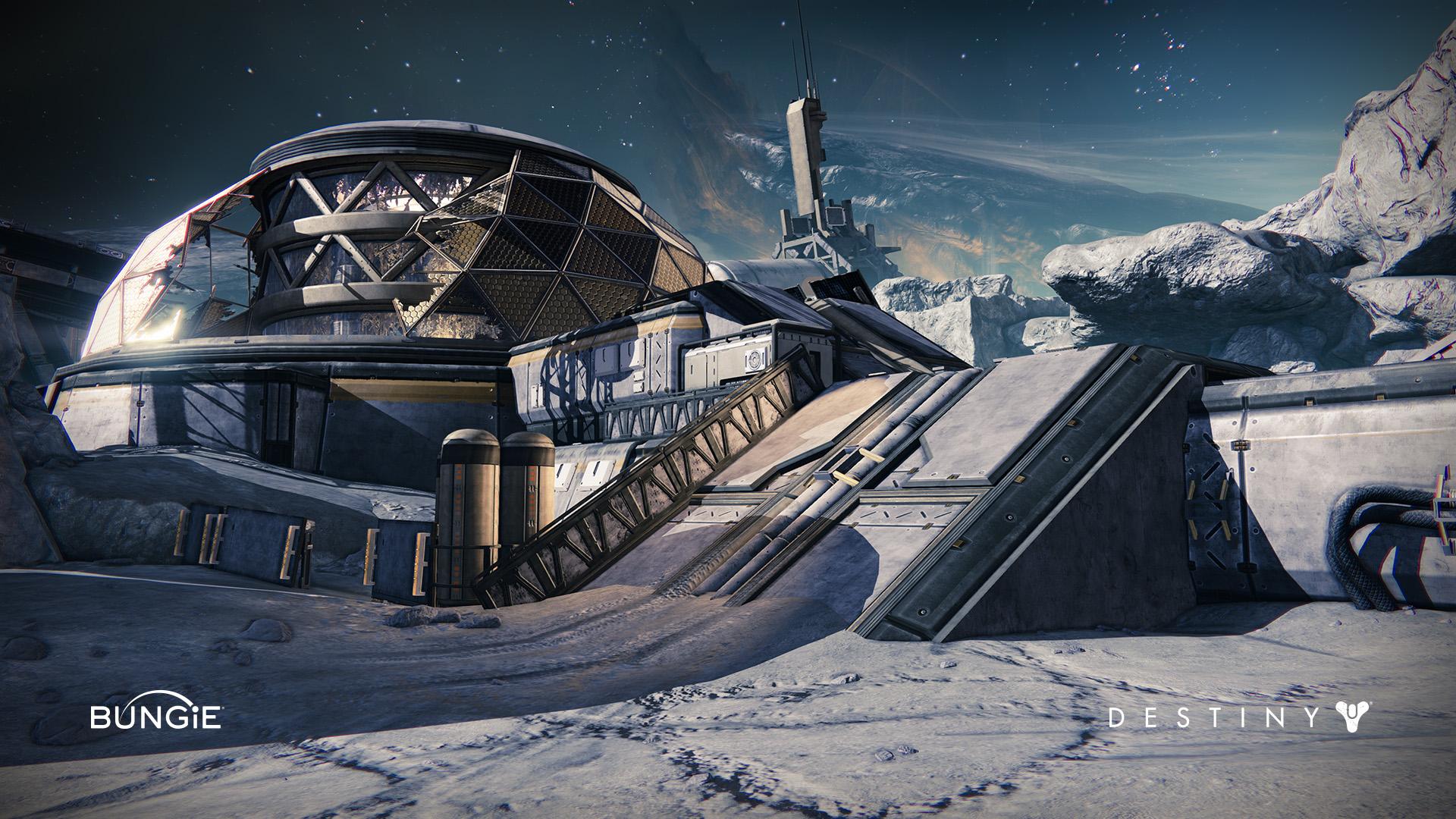
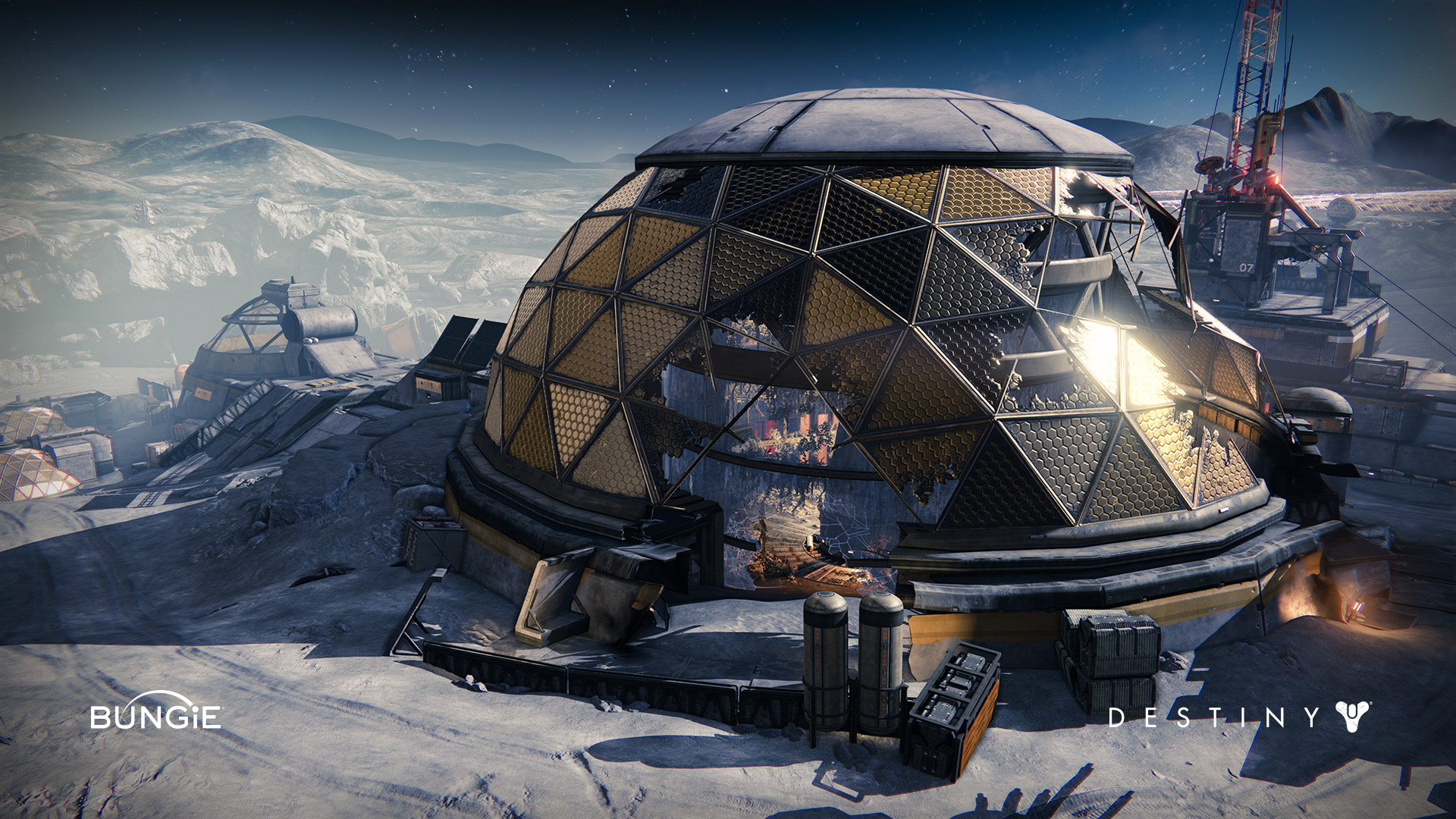
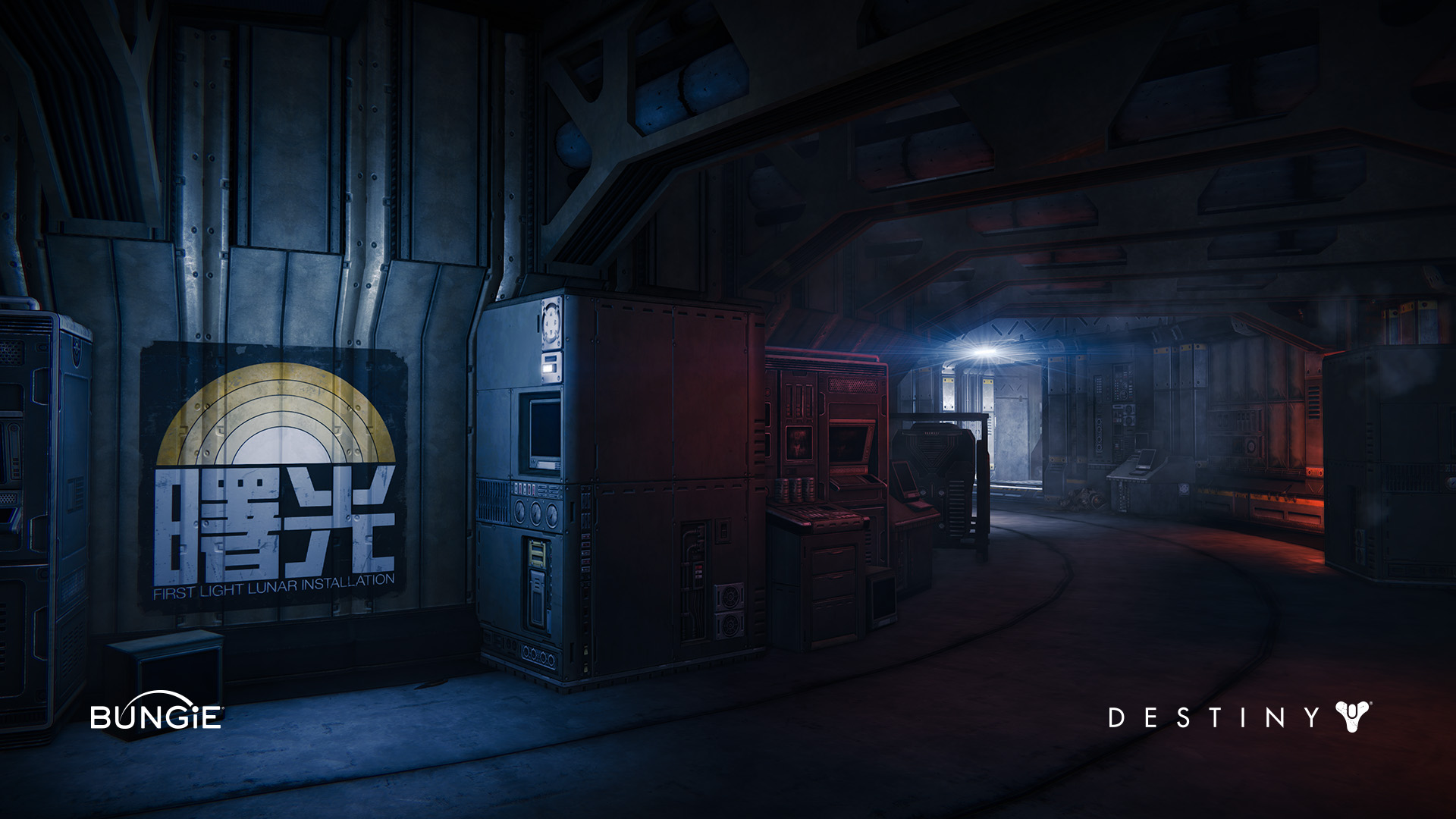
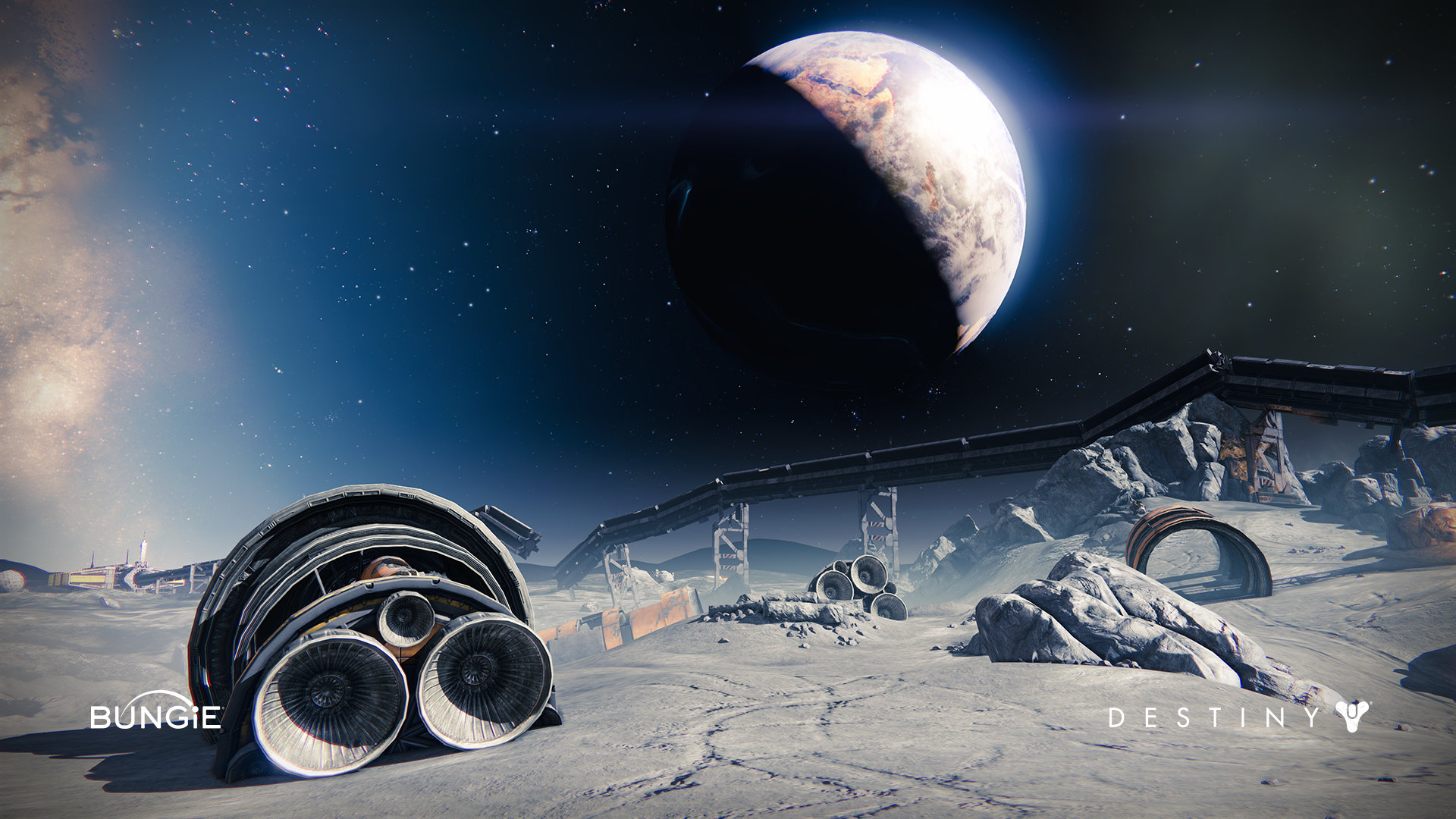
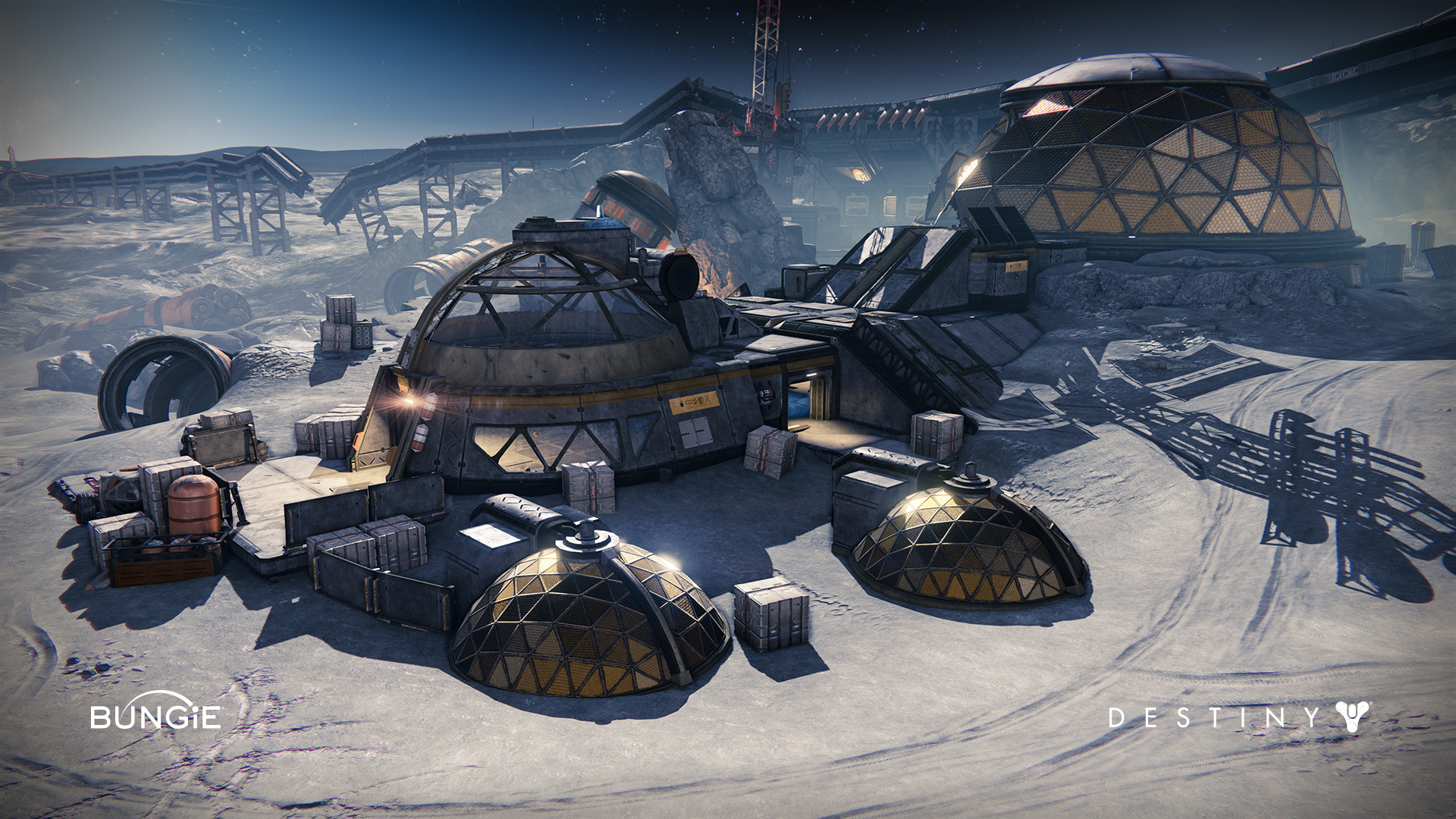
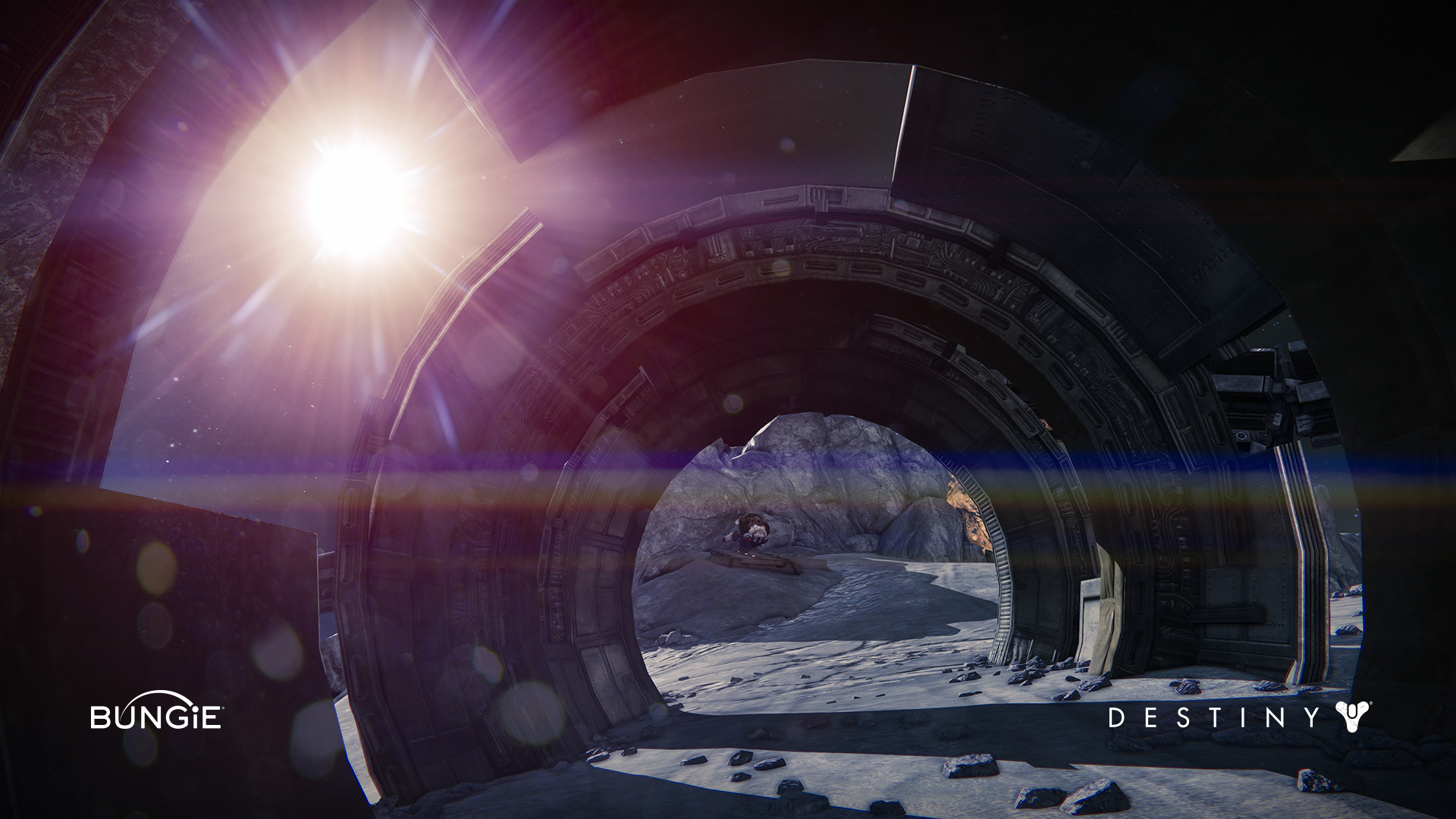
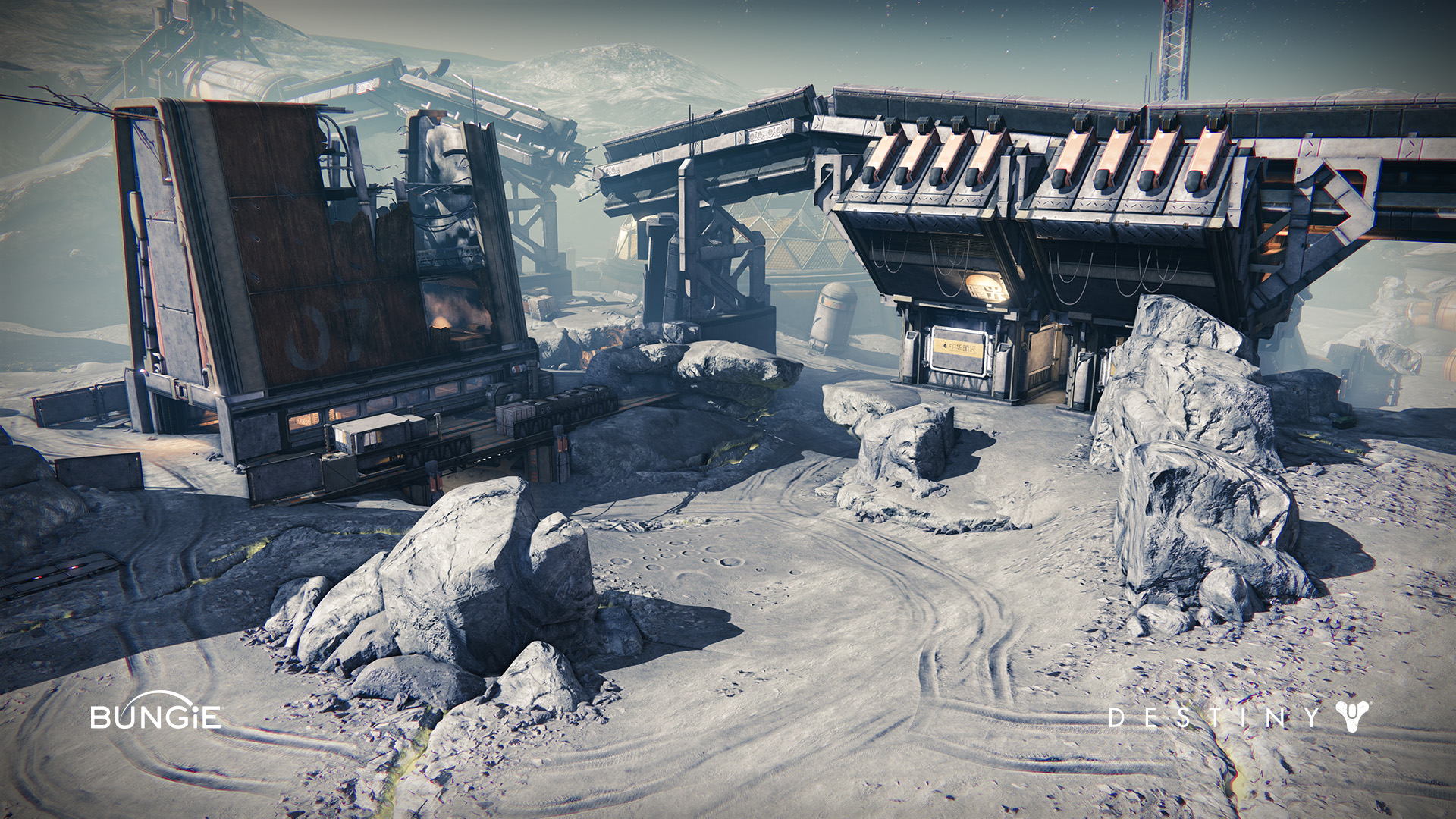
I really wanted to build a map on the Moon.
For this layout, I wanted to create strong central flow lines for players on foot that not only crossed over vehicle lanes—as with Bastion—but also ran alongside them. The geographical theme of the Hive bursting forth from the moon and fracturing its crust gave me the idea of using cracks in the rock as slot canyons to create interplay between players and vehicles along the main thoroughfares. Players would them migrate upward to the central structures built for tighter combat between buildings, while vehicles would dip through tunnels and caves and circle the central dome.
Assignments change, though, and Mick Buckmiller ended up taking point on this map and shuffling much of my unfinished first draft layout, migrating the tall wedge structures to line up "vertically" with the central dome, and flattening out much of the terrain. But, the central dome structure and the terrain loop around it remained from my starting draft, as did some open terrain with scattered rocket parts around the perimeter of the map.
Mick Buckmiller, Josh Markham, Andrew Weldon
Josh Markham, Mick Buckmiller, Adam Williams, Todd Juno
Mike Poe, Aubrey Pullman, Thad Steffen, Tyson Allen
Ryan Watkins, Isaiah Sherman
+
+
+
While Destiny's vehicle-focused Crucible maps were never ported to Destiny 2, First Light found new life (or, you might say... second light?) as part of the expanded Moon destination in Destiny 2: Shadowkeep. Here, First Light became the Lunar Battlegrounds and featured as the starting point of the Shadowkeep intro mission, "A Mysterious Disturbance." In 2021, the Lunar Battlegrounds returned again as one of four maps in the Season of the Splicer seasonal activity, "Override."
While the map saw adjustments to be integrated back into the Moon destination, both activities anchored to the most intact sections of my original layout, including several elements right where I had left them years prior. I think that's neat!